January 17, 2015

(17) Höfele : Shakespeare doubters have lost their balance Höfele part2

A N D R E A S   H Ö F E L E (2)

declares [Anti-Stratfordians] as mutated 

"ghost searchers", "deviant visionaries" or "Spökenkiekers"  


Andreas Höfele, Professor  for English language and literature in Munich, former President of the German Shakespeare Society dealt in a lecture (2003) on the skeptics, who feel not able to recognize William Shakespeare  from Stratford  as the author of the works.   - His presentation revealed that he considers the doubters as a category of people who seek a playground for hunting the non existent ghost.

Because of his lack of doubt (identical to most academic experts)  he never felt it necessary to do some own investigations on unsolved scientific authorship questions
. In his synopsis, he formulated vividly that ..... those who search for him [Shakspere] have  mutated into "ghost searchers", "deviant "visionaries" or "Spökenkiekers"  These minds  ......have lost their balance.... 

May it be that doubters have not lost, but not yet found their balance?

Since the main impetus for a Sciencist is doubt, you will not call HÖFELE a scientist,  but  perhaps a mediocre  novelist ?


January 16, 2015

(16) Why "the informant" does not mention Shakespeare's name? - Höfele part 1


A N D R E A S  H Ö F E L E (1)

Anglistic professor wrote a novel "The Spy" 

with a core issue of Marlowes assassination.


Andreas Höfele, Anglistic Professor in Munich Univerity (LMU) , former president of the German Shakespeare Society,  wrote a historical novel "The Spy,"[.   (Der Spitzel) the informant] set in  London of the late 16th century. 

The story centers on Robert Poley, a historically documented government agent and informer. Poley works within the secret intelligence network of Elizabeth I. He is involved in surveillance, manipulation, and political intrigue, most notably in connection with the Babington Plot, the Catholic conspiracy that led to the execution of Mary Stuart.

A central strand of the novel concerns Poley’s ambiguous role in the mysterious death of Christopher Marlowe in 1593. Höfele uses this episode to explore unresolved historical questions and to suggest that Marlowe’s death may have been politically orchestrated rather than a simple tavern brawl.

From the available historical sources Höfele constructs novel-like the fictional story, as Marlowe on May 30, 1593 was murderd: all historical figures are mentioned with their real names citing historical documents literally. In Deptford, near London Marlowe is lured into a trap and murdered by three informants of Walsingham and Essex "Pooley, Frizer and Skeres" under covert directory of Richard Bancroft the later bishop of London (1597)

The gifted poet Marlowe, of the same age than Shakespeare, is plastically drawn [ by Höfele] in his diversity and magnitude.  At the end of the novel , Shakespeare's last journey traveling home by coach back to Stratford [1611? / 13?]  is described  in a strange way, without naming Shakespeare (but  identifiable)

Höfele: Translation from German:  He [Shakespeare] was not happy, hardly any work was done, he was worried about the next, he made himself the fear of failure to worry about the next, always uncertain at the mercy of the public,   ,  any success increased the fear of failure. Only the purchase of land [in Stratford] had subdued the fear . Estates were the only ones that gave security   the only security  in the world..  Piece by piece he had bought it together. He could go on the field and say : the pasture there is my Prince of Denmark, or: this slope of the hedge down to the creek :  Macbeth..   London ... Never again!.  In the  small world of his prosperity he would spend his days., The storms of life caught  -a gentleman. He was on target. House, yard, trees, fields
gathered around him 
 .....

Is it conceivable that  one of the must renowned  academic  german Shakespeare experts  presents the greatest literary poet genius  as a  "Biedermann", who finally moved into his personal safety of its real estate holdings in Stratford?

Why Höfele ( former  president of the German Shakespeare Society ) did not include  Shakespeare's name in his book in contrast to all other contemporary real "people?    -     

WHY the  professor didn‘t  dare to do so?


VIDEOS – Complete Video Archive:

OPEN  —>   Heading-->  Home -->Videos -- Shorts  -- Posts
                                                                   ->Popular

January 15, 2015

(15) The true Shakespeare: Marlowe's unsubstantial death:

      MARLOWE's "UNSUBSTANTIAL"  MURDER" 

a factual contemporary Conspiracy!  

No conspiracy theory!


A conspiracy is based on deception by definition, but not necessarily on lower moral motives. The term "conspiracy theory", however,  has always a negative connotation, since  deception and secrecy are seen as their breeding ground.

This has been part of  Marlowe's (alias Shakespeare's) doom . Marlowe's life-saving corresponded to a plot, but not necessarily to a conspiracy. It was neither an intrigue nor a collusion to commit a crime.

It was an appointment on the part of the Crown to a not legally conformant, but morally justifiable act in the interest of a life-saving  of the greatest  English poet Genius......


VIDEOS – Complete Video Archive:

OPEN  —>   Heading-->  Home -->Videos -- Shorts  -- Posts
                                                                   ->Popular


January 14, 2015

(14) Gelferts doubtlessness about Shakespeare!

     "Shakespeare  not an "intellectual"  

but from a rural middle-class",  


Hans-Dieter  Gelfert, Professor Emeritus FU Berlin, wrote  a book about  „Shakespeare"  (C.H.Beck Wissen 2000 , Second edition 2014). 

There he states that it would be difficult to imagine  Marlowe's figures  „Tamburlaine“ and „Faustus“ in  Shakespeare , since ...


...Shakespeare  was not an "intellectual"  but from a rural middle-class, without Marlowe's  elitist ethos .


Thus alleged truths are proclaimed from legends of so-called Shakespeare experts that seal the authorship problem finally and uncontradicted.

Do Gelferts certainties  really correspond to the truth?


January 13, 2015

(13) A unique difficulty preventing "400 years of collective intelligence" to unravel the Shakespeare authorship riddle.

FERMAT's  and   SHAKESPEARES's

 conjectures. -

Parallels ??


Keeping in mind that for hundreds of years, there is a unique Shakespeare authorship problem,

this inevitably leads to the question of how such a unique situation could arise and why it could not be solved until today.

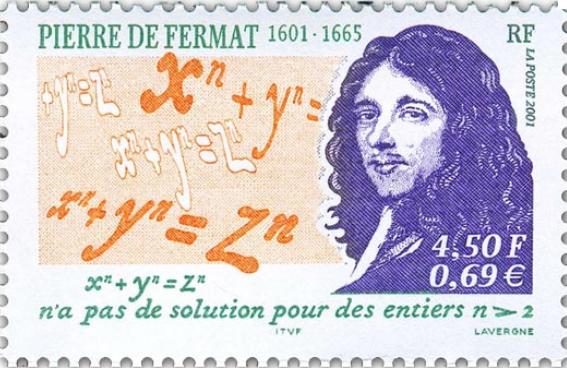
 One can postulate with considerable plausibility, that there has to be a unique difficulty which prevented "400 years of collective intelligence" to unravel the mystery. The unusual problem is reminiscent of the hundreds of years of attempts to prove


Fermat's conjecture
  (see  picture, the french Mathematician Pierre de Fermat).

During the centuries the world was convinced that there must be a solution!  The solution was finally found in 1994  it  required hundreds of years and a about 100  pages
.
It tells us that some  assumptions can not be proven more simple. You may  transfer this analogy to the solution of the conjecture of the equation

                  
  Shakespeare [playwright]  ≠  Shakespeare [Stratford]
 0 Kommentare 


VIDEOS – Complete Video Archive:
OPEN  —>   Heading-->  Home -->Videos -- Shorts  -- Posts
                                                                   ->Popular


January 12, 2015

(12) Shakespeare and the Authorship :The Holocaust and the NYT

A    R E P U D I A T I O N

of Shakespeare amounts 

to a "non-recognition of the Holocaust"

______________
                                                                      William Niederkorn


You may not expect in which dimensions  the controversy over Shakespeare's authorship continues to work until the 21th century: There was the proposal by William Niederkorn in the New York Times of 30 August 2005  to integrate our extended  knowledge and research of the Shakespeare authorship problems into future academic curricula on Shakespeare8


NYT
,
30.August 2005 Niederkorn  ...On both sides of the authorship controversy, the arguments are  conjectural. Each case rests on a story, and not on hard evidence.  Either side, or both, might eventually be proved wrong. Meanwhile, and  it could be a very long meanwhile, perhaps an eternal  meanwhile, things  will continue as they are . Or perhaps not. What if authorship studies were made part of the standard Shakespeare curriculum? 


The Harvard professor and Shakespeare expert Stephen Greenblatt expressed his outrage in a response letter to the "New York Times" Sept.5, 2005: A repudiation of the Stratford man would amount to a "non-recognition of the Holocaust,"

NYT, 5.Sept.2005 Greenblatt   »In both cases an overwhelming scholarly consensus, based on a serious assessment of hard  evidence ,is challenged by passionately held  fantasies whose adherents demand equal time. The demand seems harmless  enough until one reflects on its implications. Should claims that the Holocaust did not occur also be made part of the standard curriculum?«


Postscriptum: Meanwhile "Master Degrees" on the Shakespeare Authorship problem have been established at the  
Brunuel Unversity London  and the Portland University ,Oregon/USA 


=====================


VIDEOS – Complete Video Archive:
OPEN  —>   Heading-->  Home -->Videos -- Shorts  -- Posts
                                                                   ->Popular


(11) Kurt Kreilers blind Spots

"Stratfordian"  STANLEY WELLS

 beats "Oxfordian"     KURT KREILER

up with the "crucial  1604 argument" ?


In a televised interview in 2009 (<-- ) of SF1 (Switzerland) with Kurt Kreiler about his book "The man who invented Shakespeare"  ( ↓ ) Kreiler argued for the theory of Edward de Vere, Earl of Oxford as the true Shakespeare, the theory existing for almost 100 years. The interview was followed by the counterstatement of Stanley Wells.


      Kurt Kreiler         
Stanley Wells
At the beginning of the Interview Kreiler was asked about other possible candidates. He argued that only two other candidates could be seriously discussed, Bacon and Marlowe: Both he quickly dismissed with a few sentences. To Marlowe, he just added:

(1)"he was killed and you can not really say that he could have survived his death, which is very well documented."..... and ..... (2) "Marlowe writes unlike Shakespeare"

This approach can be seen as paradigmatic of the stagnation of the authorship question.

1) Which reasonable person might get the absurd idea that Marlowe has survived his death, which is rumored as short notes at the end of the 16th century :
once he died of the plague (1593 Harvey),
once of a struggle because of a love affair with a rival (1598 Meres), once he stabbed himelf in defense in the eye! (1600 Vaughan).

 Vaughan must have borrowed from Meres. Could one call this "very well documented " ?.

2) Their different styles mutually exclude each other. - Really?
 Marlowe and Shakespeares writings at different ages would suffice to explain their changing style, as a result of a maturation process

 (Compare the situation to Beethoven's early String Quartet op.18.1 with the late op.94. the composers never could have been the same!).

The interview did not deal with the all-important question how Edward de Vere, Earl of Oxford  can be compatible with Shakespeare, who died already in 1604.
Stanley Wells beats him up with this missing argument?


Kurt KREILER

January 11, 2015

(10) Stephen Greenblatts fatal gaps on Shakespeare

STEPHEN  G RE E N B L A T T (2)

incapable to reflect

on a Marlowe / Shakespeare authorship problem!

Harvard professor Stephen Greenblatt gave an interview with the "Süddeutsche Zeitung" about Shakespeare,  June 22,  2006.

His key findings on the Poet  got its own 3 Subtitles :

1"To deprive himself of any inspection, was the strategy in Shakespeare's life."

2 " There was a painful gap between what Shakespeare wrote, and what he has lived."

3 "Shakespeare was absolutely determined ,  not going to jail."

All findings of Greenblatt  would get an immediate sense if he had included  the Marlowe-Shakespeare  theory  which states  that Marlowe would have  come  to death unless his patron (William Cecil) would not have had the power to make him disappear from the focus of the public.

Greenblatt's intuitive knowledge that Shakespeare tryed a lifetime to escape any control of his "being known" fits like a key to the lock. Marlowe achieved his hiding  by a  frequent change of the author's name or initials (including Shakespeare) which  could not be assigned to one person. 

The extent of personal and literary ' Identity change", is beyond human imagination.


VIDEOS – Complete Video Archive:
OPEN  —>   Heading-->  Home -->Videos -- Shorts  -- Posts
                                                                   ->Popular


January 09, 2015

(9) Stephen Greenblatt's "Art of Repression" of a Shakespeares authorship problem.

STEPHEN  G R E E N B L A T T (1)

not ready(?) to dare a debate  

about the literally congruent disaster of Marlowe's destiny?


                                              Stephen Greenblatt       Greenblatt: [Will in the world]

The Shakespeare biographer Stephen Greenblatt in his book "Will in the World" notices that Shakespeare after his previously aspiring life, over and over again in his works points to an unforeseen disaster, and to a sudden unhappiness, fear and loss , and still staggering, to his loss of identity, name and social status.!

"Again and again in his plays to unforeseen catastrophe. (...) Smooth sailing turns into a disaster, terror and loss. The loss is obviously and immediately material, but it is so, and more crushingly, a loss of identity (...) this catastrophe is often by the deliberate alteration or disappearance of the name, and with it, the alteration or disappearance of social status. «


Why Greenblatt is not willing to (at least)  dare a debate  about the literally congruent disaster of Marlowe's , The True Shakespeare's,  destiny?
 
.What went wrong in Greenblatts brain?


———————————————————

VIDEOS – Complete Video Archive:
OPEN  —>   Heading-->  Home -->Videos -- Shorts  -- Posts
                                                                   ->Popular


January 08, 2015

(8) Shakespeare Authorship. Tobias Dörings blind spots. No mysteries about the banality of the bard!

THE W E I R D  Q U E S T I O N 

of the president:

                         "Why do people still puzzle over a (non existing) puzzle?


Prof Tobias Doering


  Prof.Tobias Doering, Munich, President of the "German Shakespeare    Society (2013)" , wrote a review in the centre-right,  liberal-conservative German newspaper  "Frankfurter Allgemeine Zeitung" (FAZ)  October 12, 2011 on the occasion of the film start "Anonymous" entitled :

 -->"The banality of the bard or as you like it" . 


Doering was certain that the  infinite Shakespeare Authorship debate is without substance.  -  With respect to the facts, he argued,  nothing had changed. 

There  would be no mystery about a Shakespeare authorship question but about  the question why people still puzzle over a (non existing) puzzle.

(Info on the Declaration mentioned , click here!)


—————————————-

VIDEOS – Complete Video Archive:
OPEN  —>   Heading-->  Home -->Videos -- Shorts  -- Posts
                                                                   ->Popular


January 07, 2015

(7) Number of Shakespeare authorship candidates not the result but the cause of the problem!

WILLIAM  S H A K E S P A R E  

had no part  in an abundantly published

 contemporary wealth 

                                     of  Literary  Genres?

 W H Y?


 List (1) of contemporous english writers between 1585 and 163
Academy, Adventures, Advocate, Anatomies, Annales, Answers, Anthologiae, Appeal, Apologies, Anti-romances, Apothegmes, Arraignments, Atropoion, Banquets, Bookes, Caveats, Challenge, Chronicles, Complaints, Compendium, Conceates, Confutations, Considerations, Consolations, Controversies, Cures, Declarations, Defenses, Delightes, Description, Devises, Dialogues, Dictionairies, Dirge, Discoverie, Discourses, Egloges, Elegies, Elements, Emblemes, Encomiums, Epigrams, Epitaphes, Epistles, Essaies, Examinations, Expositions, Fancies, Fictions (Moral), Fragmenta, Funerals, Histories, Hymnes, Humours, Instructions, Itinerariums, Invectives, Lamentations, Laws, Legends, Lettres (and anwers to letters), Madrigales, Meditations, Memoratives, Messages, Mirrour, Miscelanea, Miseries, Motives, Motto, Narrations, News, Novelles, Odes, Orations, Observations, Pamphlet, Parables, Paradoxes, Paraphrastical Transcripts, Pastoralls, Passions, Philosophies, Practike, Principles, Poems, Poetical Comparisons, Portraitures, Prayses (Praises), Psalmes, Questions, Quodlibets, Recantations, Recreations, Register, Remarks, Remedies, Repliques, Resolves, Resolution, Rhapsodies, Sacrifice, Satyres, Scourges, Sermons, Similies, Sonetts, Songs, Summons, Survey, Tales, Tears, Theoricke, Tracts, Transcripts, Translations, Treasuries, Treatises, Triall, View, Visions, Vox, Warnings, Workes, und viele andere.


List (2) of (core) title words of english books between 1585 and 1640
 from authors of list 1


The names (excerpt) listed above represent writers, poets and translators, who lived in the age of Shakespeare, and whose writings are available digitally today. - The list below represents  the corresponding  literary genres of these writers, taken only the key title words from  their book  covers.

Is it conceivable that during  that rich "Elisabethan" literary era, the greatest poet and universal literary genius of modern times William Shakespeare had no part in these so abundantly published literary Genres? click link!.


K

January 06, 2015

(6) Shakespeare's german representatives (2013) !

 GERMAN SHAKESPEARE SOCIETY

 asking for a CRITICA L REVIEW about 
Shakespeare's Authorship 

Not willing to accept a nonfiction book

------------------------------------
THE TRUE SHAKESPEARE:Christopher Marlowe


Tobias Döring
Sabine Schülting
Joachim Frank


I sent the German  non fiction book "The true Shakespeare  Christopher Marlowe
"  to representatives of the German Shakespeare Society (DSG), asking for critical Review in the Yearbook of the Society.

Prof. Tobias Döring,  President of the "German Shakespeare Society" aknowledged  with thanks the receipt of the book , remarking, that he had forwarded it for  archiving  to the Shakespeare Achive in Weimar.
It is remarkable that a German president of the German Shakespeare Society   didn't not intend to read the book and to argue with the thesis (I suppose, according to his internal attitude : "Yet another book with such a crazy theory")

 Prof.
Sabine Schülting, Berlin  responsible for The Yearbook of the Society confirmed the receipt of the book upon inquiry after 4 month, , answering
"Where would we be  if we would review any unsolicited book?  In  refunding  the return postage (€ 4.10) she  would be  happy to return the book. "

Prof. Joachim Frenk, Saarbrücken, responsible for the review part of NEW BOOKS about Shakespeare in the Year-Book... confirmed the receipt after 6 months by sending it back, expressing his regret that unfortunaley there was not enough space in the annual book review section .....
----------------------------------
.


VIDEOS – Complete Video Archive:
OPEN  —>   Heading-->  Home -->Videos -- Shorts  -- Posts
                                                                   ->Popular


January 05, 2015

(5) Jim Jarmusch, John Hurt and the true Shakespeare !

J I M   J A R M U S C H 

favors Christopher Marlowe


            Jim Jarmusch                and           John Hurt


At the Cannes Film Festival in 2013 on the occasion of a press conference about the film  "Only Lovers Left Alive! " Jim Jarmusch  and his performer John Hurt (right - he plays Christopher Marlowe) insisted that we must recognize Marlowe as the poet genius Shakespeare.  -  The Stratfordman was illiterate...

When John Hurt was questioned about his role as a centuries-old vampire (he plays Christopher Marlowe in old age) he gave the ball to his director Jim  Jarmusch saying:


John Hurt: “Well, I’m here basically because I think Jim utterly believes in Christopher Marlowe. He believes that he wrote Shakespeare. He believes that he should be alive now.  And  … I  am!”

Jim Jarmusch .  ... there are different theories of who wrote these things. One of them:  it’s very possible that Christopher Marlowe’s death was faked – uh, his murder –  there’s a lot of research showing this. But really, this idea  of  Shakespeare – it’s not really important who wrote these beautiful  things, but I think it’s very interesting that they are assigned to  someone that quite possibly was illiterate – William Shakspeare. 
It’s very likely he could not even write. So, someday maybe, this will be revealed. I don’t know. May be never!”

From whom Jim Jarmusch had his information ?


————-

VIDEOS – Complete Video Archive:
OPEN  —>   Heading-->  Home -->Videos -- Shorts  -- Posts
                                                                   ->Popular


January 04, 2015

(4) Shakespeare beyond Doubt?! ...To question or not to question, that is the question !

Shakespeare beyond Doubt ?

2 books with almost identical Design and Title ! 

But one essential difference: the question mark!


Following the film event „Anonymus (2011)“ of Roland Emmerich (claiming that the playwright of „Romeo_and_Julia“ was not the Stratford man William Shakspere but Edward de Vere, the 17th Earl of Oxford), the „Stratfordian Representatives"*** felt the need to oppose the growing erosion of public opinion that the Shakespeare authorship question or reasonable doubts about Will are justified.


Pressen and former chairman of the Shakespeare Birthplace Trust ***Paul Edmondson and ***Stanley Wells decided to organize a book in which major authorities once and for all had to reject that "dangerous" claim, as lacking any credible supporting evidence. The Guardian, reporting about the new release of the book, march 30, received more than 1000 letters


Since the title already brought the essence of the book in a nutshell 

Beyond doubt". =. There is no doubt !", 

the U.S. based "Shakespeare authorship coalition (SAC) ", existing for some years, felt bchallenged: They organized experts who should scrutinize the weak arguments of the experts of the other book. They used the same layout, the same title , with the tiny difference of a final question mark.

  Beyond doubt ?  

Unfortunately the "SAC" is a flawless "Oxford-equals-Shakespeare" self-help group.  (even if the coalition  cannot  admit it openly) 

——————————-
VIDEOS – Complete Video Archive:
OPEN  —>   Heading-->  Home -->Videos -- Shorts  -- Posts
                                                                   ->Popular

January 03, 2015

(3) Why a renewed Shakespeare Authorship Debate ? [Part 3]


IT  IS  T I M E 

to oppose the counter-productive, ludicrous Argument 

of the high number of putative Shakespeare candidates (>75).

—————————-


The unrealistic high number of

 putative Shakespeare candidates (>75).r has early discredited the authorship debate  and was promoted deliberately by Shakespeare experts:

Stanley Wells: "The very idea that so many peoples have been suggested as the author of Shakespeare works in itself to me is enough to show that it is a mad idea, it's just crazy

The exorbitant number of "literary" contemporaries within half a century in London did not evolve - as commonly believed - from a  flourishing literary era in Elizabethan England but from the abundance of the creative power of a "presumed dead" poetic genius disguised and camouflaged with excessively many names. 

The name "Shakspeare"  (taken as a masking name from a living person for safety reasons) as one of those names had been forced on the poet's genius primarily as permission of the crown to continue his career as a playwright.


——————————————
VIDEOS – Complete Video Archive:
OPEN  —>   Heading-->  Home -->Videos -- Shorts  -- Posts
                                                                   ->Popular


(


Video) The Shakespeare Authorship 
was a Conspiracy 
[false flag operation]
or a clandestine rescue
operation of the Crown !

It is not a

->Conspiracy Theory!.!(s.Video)