Showing posts with label Unanswered Question. Show all posts

August 05, 2020

(588) Shakespeare‘s identity : Encrypted beyond any recognition

ALEXANDER. W A U G H (8)
   Encrypted 
beyond any Recognition?

Alexander Waugh 


I am  always fascinated by the imaginative power of the human brain in general and  of Alexander Waugh in particular, what a fantastic obsession in a neve-never land, encrypted beyond recognition, decrypted after 400 years, by an 'unleashed' brain.

Alexander Waugh‘s Video
On Thomas Edwards
 Video 
Alexander Waugh‘s message (3.8.2020):  Thomas Edwards in 1595 knew that Shakespeare was the pseudonym of Edward de Vere, Earl of Oxford! ....
Can that be true at all?


This time Alexander Waugh in his Video series used Thomas Edwards (TE) a contemporary of William Shakspere „trying to prove that his (TE) witness knew, that Shakespeare was a pseudonym being used by the poeticall 17th Earl of Oxford (Edward de Vere)".  

As the decisive piece of evidence    
selected TE's" Narcissus".

It remains difficult to understand why Waugh didn‘t give the  full (significant!) title and picture! of TE’s book „Cephalus and Procris“ (1595) and  why in 1595 in the dedication entitled „To the Honorable Gentlemen & true favorites of  Poetrie" the author openly confesses :
                       " O what is honor without the complement of Fame?"
                          "...my soul darkened with the terror of oblivion"

Who other than Marlowe in 1595 could have had a motif to explicitly write and reflect such  perspective of life.- . I see no motif for Edward de Vere.

How can we  understand, that  a completely unknown Thomas Edwards was the first author to mention Shakespeare’s op.1  "Venus and Adonis (1593)  in his "Cephalus and Procris" which entered  the Stationers' Register , October  22 1593 -  

How can it be that at that early time (1595), TE  in Narcissus is already quoting Marlowes "Hero & Leander ",!??    How  could  he have known from this poem that early, which appeared in print only years later  (1598)?

 Isn't the authorship thesis ... 

A.)  that the only existing poet and playwright genius of his time,
surviving  Christopher Marlowe  was the author of  "Venus & Adonis" (1593 Shakespeare's op.1)  and "Lucrece" (1594 Shakespeare's op.2)  far more logic and plausible  ...than

B )  that Edward de Vere, the 17th Earl of Oxford, with no documented capabilities of a playwright genius whatsoever, was the "true" Shakespeare?

 s.Videos.-
                                                                Venus and Adonis

                                https://www.youtube.com/watch?v=Oi7nFkhbDjM&t=1s


                                                                  Hero & Leander


                                    https://www.youtube.com/watch?v=GZygXSElqlg&t=1s 

July 14, 2020

(585) DOUBLE DUMMY : Oxfraud / Shakefraud! The Questionability of the Shakespeare Authorship issue.

From the worlds most gigantic „writer“ 
   naming  himself „SHAKE-SPEARE“
never a single („hand“) written [letter]  has ever been discovered.That‘s...

the most Incredible Grotesque:

The world's greatest literary and playwright genius of all time,
 who during his entire lifetime (... especially in his 25 years in London)  never communicated (by any note, sentence or letter) with any publicly known person....

Stunningly, that does not need an explanation for the impressive & bizarre „Battle Troop“ (...fighting for „William“ from Stratford) ...called the

„OXFRAUD“
With their admirable perseverance for the absolute 

„Unimaginable“ of a (double) Shakespeare
Authorship falsehood !
———
Believe it or not! There did exist a „William Shakspeare“  from Stratford. 
But he was no poet and playwright  genius!

He was taken as a protective „Dummy“, a pseudonym ! (for deadly threatened Christopher Marlowe
accused  of  High-Treason & Heresy)

That‘s the even more remarkable
„SHAKEFRAUD“!


The Authorship  Circus


July 10, 2020

(582) The Shakespeare Authorship Debate Ends Here — Marlowe’s Smoking Gun

The deliberately overlooked „Smoking guns“
for Marlowe, the most plausible candidate of the Shakespeare authorship debate.

There is only one  but crucial reason why Christopher Marlowe {C.M.}, as by far the most plausible and logic candidate, has constantly been rejected or dismissed by leading „Stratfordian“ academics (as well as by those impressive relentless ridiculous „Oxfraud“ combat troop) in the search for the true poet genius „Shakespeare.

It must be due  to the supposed certainty that the poet genius { C.M.} died too early that he can by no means  play a part in the authorship debate. 

———  B U T ————

 ... astonishingly and strangely enough, 
Why several historical sources found (which show that Marlowe survived) have not had any significant status to date ?

1599 [May 30]
6 years after Marlowe‘s alleged death a man is documented who presented himself for admissions to St.Albans, The English Colledge at Valladolid in Spain.  -  The College Register (Liber Alumnorum) shows the entry:
 Jo. {hann}Matheus {John Mathew}
   Right Margins.  al {ias} Christopher Marlerus {Christopher Marlowe}

1602 [July 4]
A letter by William Vaughan from Pisa (Italy) to the English Royal court was discovered by Leslie Hotson, wherein you read...
 „,,,in the said seminary there is....one Christopher Marlor (as he will be called) but yet for certainty his name is Christopher, sometimes Master of Arts of Trinity Colledge in Cambridge, of very low stature,well set of black round beard, nor yet priest, but to come over in the mission of the next year ensuing....

1604 [Aug.3 - Sept.23]
Gatehouse (Prison)London Westminster

Committed by my Lo: Chief Justice      Christopher Marlowe, alias Matheus, a seminary priest oweth  for 7 weeks and 2 days


_____________________________________________


The influential Marlowian Peter Farey has discussed the subject but came to the opposite  conclusion that a certain „John„ Mathew used the alias name of Christopher Marlowe.

Farey‘s logic is, however not convincing... given all arguments and facts

http://marlowe-shakespeare.blogspot.com/2010/07/john-matthew-alias-christopher-marlowe.html

_________________________________

For an abundance of  reasons, ( click links). there can be little doubt, that Christopher Marlowe used the name „Mathew“ as an alias Name , he used , however  „Tobias“ ,or „Tobie“ (Mathew) as the prename.


The fact, that Francis Bacon (living at the same time as Marlowe /Shakespeare in the same City in London) in his entire life never ever used or wrote the name „Shakespeare needs a plausible explanation: Bacons  impressive contents of his  documented correspondence with „his alter ego“ Tobie Mathew clearly prove, that Tobie Matthew was an alias for concealed Marlowe/Shakespeare.  


For details click this VIDEO!    Below.  


September 27, 2018

(536) John Davies : A double falsehood ? [false identities and name - identical to Shak(e)speare?]

J O H N   D A V I E S ( 8)

Consider that we learn that at Shakespeares times there existed 

Two high level 

contemporaneous POETS 

 who published with...


the same name "John Davies!", in
the same year "1602"  , in             
the same City in "London about    
                the same literary subject matter"  (the Soul) ,
"
 2 masterpieces of philosophical literature

                         "NOSCE TE IPSUM".                    and .                   „ MIRUM IN MODUM"

at Shakespeares times there existed two high level contemporaneous poets who publieshed with    the same name "John Davies!", in  the same year "1602"  , in  the same City in "London about   the same literary subjectmatter"(the soul) ,  "   2 masterpieces of philosophical literature    "NOSCE TE IPSUM" and "MIRUM IN MODUM"
________________
Consider that in the "Scourge of Follies" (Date of print not secured , >1610) t
the one John Davies wrote a dedication to the other! 

 How do you interprete this poem?

in the "Scourge of Follies" (Date of print not secured  >1610)  one John Davies wrote a dedication to the other! How do you interprete this poem?
_________________

Also note that from Essay 34 in John Davies "Wittes Pilgrimage" (1605) you get  (specific biograhical) ideas about his poignant life situation

from Essay 34 in John Davies "Wittes Pilgrimage"(1605) you get  specific biograhical ideas about his poignant life situation
                                             Essai 34 in Wittes Pilgrimage (1605)
                                                                    ("Marlowes life situation")


Doesn't this situation in 1605 fits better to someone else [e.g. Marlowe  who was alive but simultaneously dead] than to an unknown destiny of  a certain John Davies?


 VIDEO. ( John DAVIES.)   (30 min)
Double Falsehood .


VIDEOS – Complete Video Archive:
Open Heading-->  Home -->Videos -- Shorts  -- Posts
                                                       ->Popular


October 20, 2016

(476) Two untimely deaths block the (dis)solution of the Stratford-Shakespeare-Dogma!

    O X F O R D I A N S***

                                                    ***supporters of the Oxfordian Theory of Shakespearean authorship

for a century have not even begun to tackle the 1604 issue 

with its abundance of  insoluble literary,  psychological, 

historical and so many other conflicts ?

  _______________________________________________________
Bild
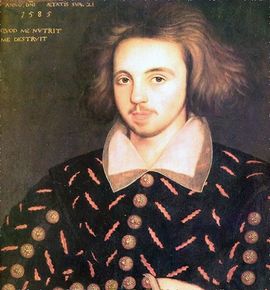
Christopher Marlowe (1564-1593?)


Bild
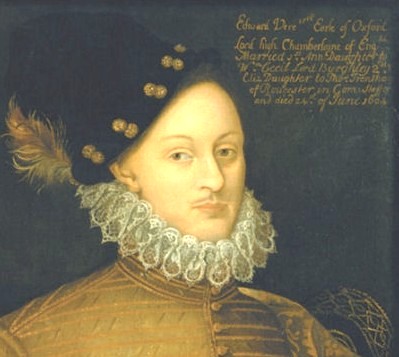
Edward de Vere (1550-1604)


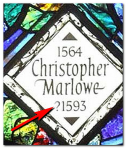
BildChurch Window, Westminster Abbey, London - (Section -Note question mark!)


One baffling Oxymoron  or irony in literary history is  that the two most influential candidates for  Shakespeare's  Authorship , Edward de Vere , 17th Earl of Oxford (†1604)   and Christopher Marlowe (†1593) both  died too early to be seriously discussed .-

Whereas the date of death (1604) of  Edward de Vere is not in doubt, Christopher Marlowe's exact death year today  is in doubt and has even been questioned in the poets Corner of Westminster Abbey (see Question mark)


Edward de Vere's  death (1604) occured much  too early....
Accepting the enforced faked death of Marlowe (1593) there would be no need to struggle with the issue of the Oxford Shakespeare authorship and Oxfords untimely death  raising endless questions


Why  Oxfordians for a century have not even begun to tackle the 1604 issue with its abundance of  insoluble literary,  psychological, historical and so many other conflicts ?

..                Without any doubt, in the long run,  Christopher Marlowe holds the  better cards.


Who Really Wrote Shakespeare? The Most Explosive YouTube Videos Online


----------------------------------------------------------
VIDEOS – Complete Video Archive:
OPEN  —>   Heading-->  Home -->Videos -- Shorts  -- Posts
                                                                   ->Popular


October 13, 2016

(471) How to explain the gigantic [but lost?] literary output of Thomas Heywood compared to Shakespeare ?

THOMAS  H E Y W O O D

The gigantic [but lost?] literary output of Thomas Heywood compared to  Shakespeare ? 


 Thomas Heywood, of the same age than Shakspere or Marlowe, started his literary career [similarly to Shakspere] late, only a f t e r  the death of  Marlowe (1593) ! Why ?

Title cover of Thomas Heywoods Play 1633
Epistle "To the Reader", ´in Thomas Heywoods Play "The English Traveler"

How can it be that in 1633 Thomas Heywood in his epistle to the Reader of his Play "The English Traveller" told us

a) that that play was one among 220 plays (Tragedies/Comedies) he had written ("beeing  one reserved amongst two hundred and twenty")

b) that he was fully aware of all his publications ("having intelligence therof") even though they appeared "accidentally"  [SOED,"a note or mark that may be retained or omitted  in a coat of arms "1610]

c) that he never had a great ambition that "his playes" to be read in volumes to beare the title "WORKES"  (such as Jonson.) " and

d) that he thought it appropriate that his plays are not anonymous ("thought it not fit that it should passe as filius populi", a bastard without a father) , thus giving each  play a "literary  father,"  appearing under different  pseudonyms (think of e.g. of Beaumont / Fletcher )

The true Shakespeare: Christopher Marlowe (5th Edition 2016)
                                 There are significant reasons to assume that Thomas Heywood belonged to the multiplicity of  pennames of "The true Shakespeare" (C.Marlowe) with  a gigantic literary output, but under many different pennames and  did  write by no means only 2 plays per year in less than 2 decades


Ai VIDEO - D I A L O G by NotebookLM
about the ORIGINAL  VIDEO below


---------------------------------


O R I G I N A L  V I D E O


------------------------------------


VIDEOS – Complete Video Archive:
OPEN  —>   Heading-->  Home -->Videos -- Shorts  -- Posts
                                                                   ->Popular


————————


October 12, 2016

(468) Breton certainly another early penname (pseudonym) of Marlowe such as Shake-speare.

NICHOLAS  B R E T O N 

 "Rules of Conduct" perfectly  fit to Marlowe's fatal and endangered concealed life situation.-

_________
First Poem title   in Nicholas Bretons
 "Melancholike Humours"

Nicholas Breton an early penname of Marlowe (such as  Shakespeare !)

In 1600 Nicholas Breton published a small booklet "Melancholike Humours(1600)" with a Collection of verses with 30 poems of different styles .  -  Poem Nr. 1 [entitled "See and say nothing"] contains 9 verses of 4 lines [s.Faksimile 1-9 above].- 

Immediately you will notice that all 9 poems represent an

inner request to the author to be cautious and not to reveal himself:

1.    fortune affordes to do nothing, to keep quiet...
2. beware of the fate of Icarus ...
3. be silent, patient, deface yourself...
4. do not exhibit (show) yourself...
5. trust nobody...
6. keepe your secresies unseen...
7. be alert and do not languish overlong...
8. conceal and do not reveal your passion...
9. be secret with your thoughts...
__________

These "rules of Conduct" 
precisely fit to the life situation of the "true" Shakespeare: Christopher Marlowe.-

Subchapter (page 548-564 of Chapter 11 - German!) elaborates indications why Nicholas Breton (sometimes "Briton") has been a pseudonym of surviving Marlowe [ alias Shakespeare ]. -

 (Bretons   s.Vol.1 and Vol.2 of his workes)

Nicholas Breton an early penname of the "true"    Shakespeare !


VIDEO   Nicholas Breton  (ca 55 min)      


VIDEOS – Complete Video Archive:
OPEN  —>   Heading-->  Home -->Videos -- Shorts  -- Posts
                                                                   ->Popular


October 05, 2016

(467) Why Ben Jonson wrote an extravagant eulogy on Nicholas Breton in 1600 but none to Shakespeare in his lifetime?

 BEN  J O NS O N 

wrote an extravagant Eulogy on Nicholas  B r e t o n  in 1600

 but none to Shakespeare in his lifetime? 

Nicholas B r e t o n   another Penname of the true "Shakespeare" .

Nicholas Breton:
 "Melancholicke Humours" (1600)

Ben Jonsons Eulogy on Nicholas
Breton in Bretons
"Melancholicke Humours" (1600)    
 
Faksimile...from "Dedication to the Reader".- N.Breton: Melancholicke Humours 1600
(Much ado about nothing!)


2 Reflections

1.) What may have been the reason that the star witness Ben Jonson in 1600 wrote a lavish praise  to Nicholas Breton, in his booke   "Melancholicke Humours" but never wrote an eulogy to William Shakespeare during his lifetime, ( only seven years after Shakspere's (Stratford) death 1623 in the First Folio)

2.) It is by no means  accidental in 1600, that Breton wrote a dedication to his Readers writing: " with:
...Much Ado about nothing...he hath made a piece of worke [s.Faksimile above] and that a Play ("Piece of worke") under that Name appeared in the same year 1600 under  the authorname of William Shakespeare? (s.Faksimile above)

VIDEO  ca 50 min


----------------------------------

VIDEOS – Complete Video Archive:
OPEN  —>   Heading-->  Home -->Videos -- Shorts  -- Posts
                                                                   ->Popular


September 29, 2016

461 The true Shakespeare (having survived Ben Jonson) wrote e debunking Epitaph on him

B E N   J O N S ON  (3)

W I T T S   R E C R E A T I O N S (2)


Ben Jonson: The star witness of the Shakespeare authorship riddle. 

Who is the anonymous author of  "Wits recreations".?


Epitaph 174 of an anonymous author in

"Recreations for Ingenious Head-peeces" (1650)

Ben Jonson
               The english Poet Ben Jonson died in 1637.  

The anonymous author of "Wits recreation" ("1640 /  enlarged 1641/ 1650 renamed "Recreations for ingenious Head-peeces")  wrote  a short  Epitaph nr.174 (s. Faksimile  in 1650 "Recreations") on Ben Jonson.

The self-assured author [most likely Marlowe, still alive] reveals that Jonson and the rest of the poets haven't been the best and he asks us if we would like to know more about his , the best authors "Story" (not about this, Jonsons grave-"Stone"). If we would know the [true] Story, it would speak  about the glory of the "true" Poet.

              Who may be the anonymous author of  "Wits recreation".?

The contextual contents of "Wits Recreations" leave no doubt, that is has been written by the concealed "true Shakespeare" alias Marlowe. - Why ? 


July 25, 2016

(445) No "Shakspeare" Academics but a quarter of educated People think William Shakespeare didn't write all the plays that bear his name

O N L I N E -  P O L L 

Dr.Stephen Purcell
Publishers Wordsworth Editions did an online survey of more than 1,000 people ( Coventry Telegraph) and found:

 26 per cent think Shakespeare didn’t write all the plays attributed to him.

This is in strange contrast to the statement of University of Warwick Shakespeare expert 
     <-----    Dr Stephen Purcell 
    
that “nearly all professional Shakespearean scholars agree that William Shakespeare of Stratford-upon-Avon was the author of the works attributed to him.
         
  How to explain this discrepancy?

  There is no escape: you need to make your own opinion!
You have an advantage over Stephen Purcell. -

You are not depending on your employer!


July 22, 2016

(442) Shakspere's missing skull and bones!

An EMPTY GRAVE in Stratford 

Your most plausible explanation?

______________

Shakespeare's grave inscription


Using Ground-Radar Sytsems (GRS)  archaeologists (having  investigated William Shakespeare's grave at England's Holy Trinity Church in Stratford-upon-Avon)  
discovered Shakespeare's skull  and  bones are missing.-
The grave is empty.

The research team's leader Kevin Colls : 
It's very, very convincing to me that his skull isn't at Holy Trinity at all.".

There was a great media coverage of this event. (-1- , -2- , -3-, -4-  , -5-)  Since it is a sacriledge to question William of Stratford as the author of "Hamlet"   researchers at once had to  dig out a longstanding (forgotten?) old myth :
grave robbers stole Shakespeare's skull in 1794.  

Why on earth the public media is  following the  establishment (Britains Tourist industry and "Shakespeare's Birthplace Trust) which have to take the identity between  William  Shakspere (Stratford)  and William Shakespeare ( the author of the Plays) 
for granted?

Why they  didn't at least discuss the possibility that  the findings could have someting to do with the 


----------------------------------------------------
VIDEOS – Complete Video Archive:
OPEN  —>   Heading-->  Home -->Videos -- Shorts  -- Posts
                                                         ->Popular


June 06, 2016

(435) Why on earth in 1628 the name of the poet "Shake-speare" was allegorically veiled: à Quassatione & Hasta?

THE  FATAL  C O N S E Q U E N C E S 

of the total academic Denial 

of a Shakespeare authorship research!

_______________________


In the 3rd edition (1628) of a "Handbook on Rhetoric" ("Χειραγωγία, Manuductio ad Artem Rhetoricam ...",1st Edition 1621) the author Thomas Vicars,  a highly educated literary man, enumerates  the best English poets (Spenser, Drayton, Wither,  ). The author refers to his youth, where he wrote a large number of epigrams,  quoting 3 and alludes to a fourth. An epigram (John Owen is credited with) appear on the title of the book.  He recommends 2 contemporary poets George Wither and John Davies to whom he  adds "that famous poet"   camouflaged .-

Shakespeare the preeminent poet of England,  is mentioned not by name but allegorically,  thus not detectable by an average London citizen !

Istis annumerandos censeo celebrem illum poetam 
qui a quassatione et hasta nomen habet,
-------------------------------------
Translation from Latin:...to those [poets], I think,  that famous poet  should be  added, which has its name from the shaking ("shake" = quassatione) of the "spear (" = hasta ")

----------------

What may be the reason  that even 12 years after the death of William from Stratford the poet Thomas Vicars did not mention  the name "Shakespeare" in the same breath together with his contemporary poetic colleagues?

(Spencer, Drayton , Wither and others, in later editions)

Doesn't  this fact represent an impressive clue to an existent historical Shakespeare-Authorship issue?(1621)


——————-
VIDEOS – Complete Video Archive:
OPEN  —>   Heading-->  Home -->Videos -- Shorts  -- Posts
                                                                   ->Popular