Showing posts with label Unanswered Questions. Show all posts

July 14, 2020

(585) DOUBLE DUMMY : Oxfraud / Shakefraud! The Questionability of the Shakespeare Authorship issue.

From the worlds most gigantic „writer“ 
   naming  himself „SHAKE-SPEARE“
never a single („hand“) written [letter]  has ever been discovered.That‘s...

the most Incredible Grotesque:

The world's greatest literary and playwright genius of all time,
 who during his entire lifetime (... especially in his 25 years in London)  never communicated (by any note, sentence or letter) with any publicly known person....

Stunningly, that does not need an explanation for the impressive & bizarre „Battle Troop“ (...fighting for „William“ from Stratford) ...called the

OXFRAUD
With their admirable perseverance for the absolute 

„Unimaginable“ of a (double) Shakespeare
Authorship falsehood !
———
Believe it or not! There did exist a „William Shakspeare  from Stratford. 
But he was no poet and playwright  genius!

He was taken as a protective „Dummy“, a pseudonym ! (for deadly threatened Christopher Marlowe
accused  of  High-Treason & Heresy)

That‘s the even more remarkable
SHAKEFRAUD“!


The Authorship  Circus


October 19, 2015

(303) Epigrammes of "living" J.D. and translations of "dead" C.M. (Marlowe) in a book 1599! 2 different authors?

D O U B L E   J O H N    D A V I E S (6)

---------------------------------------------

Why such a small booklet  needed 2 authors? The translated elegies by the "dead" Marlowe, the epigrams by the unidentifiable "living"  J.D.?

__________________________

W h o    w a s    J.D.?


CM Four  times identified

1599


1603


Experts tell us (incorrectly)  that John Davies' (Sir JD)  earliest anonymous writing is to be found in ->48 small Epigrammes published along with Marlowes translations of 10 of Ovids Elegies, ordered to be burnt by the decree of the Archbishop of Canterbury, june 1 1599. - (See faksimile 1599 .- -The 2nd Edition (1603) contained "All Ovid Elegies" , and Elegy 15 Book I (E15-I) translated twice, together with that of  B.I. = Ben Jonson?)


Why in this booklet only C.M. but not J.D can safely be identified by his name C.Marlowe-[s.Faksimile], printed on a subtitle and at the end of 3 of`the 10 elegies (s.Faksimile) ,

Why experts are sure that the initials of the author (J.D.) of the epigrammes belong  to Sir John Davies ( and not e.g. to  John Donne, John Dee, John Dickenson, John Dunbar or Jeremie Dyke  etc)?

Why a "living" author J.D. added to his 48 short epigrammes 10 selected translations of Ovids elegies of "dead" Marlowe?

Why only 4 years  later (1603)  the book had a reprint  with  the complete translation of all of Ovids elegies?

Why E15-I was printed twice,  translated also by a certain B.I. ( Ben Jonson?)?

Why such a small booklet with only 25 pages  needed 2 Authors?

Why two poems related to Marlowe's "Faustus" appear twice in JDs epigrammes?

Who is the self confident  author JD telling us in Epigramm 29  that [John] Heywood.".which did in Epigrams ecxell, is now put down, since my light muse arose..".?
Why the importance of  the epigrams by JD was graphically greatly reduced in relation to Marlowes translations in the 2nd edition?

Why the name of Ovid was omitted 1599 on the title page ?

Why JD printed his work at Middlebourgh (Netherland)?


____________________


Isn't it more plausible that the epigrammes by J.D. represent and were written by the same author C.M., "incognito" Christopher Marlowe,  J.D. being one of his new "Alias-" or "Pseudo"-nyms.- (such as Shake-speare) - The first epigram "Ad Musam 1" let us know that the epigrammes "taxeth" under a particular (later edition:"peculiar") name?


  AI   DIALOG VIDEO by Google NotebookLM
on the Original VIDEO


-------------------------------

ORIGINAL   VIDEO


October 18, 2015

(302) How to connect John Davies' "Nosce teipsum" and "Mirum in modum" 1653 with Shakespeare?

(D O U B L E)  J O H N   D A V I E S (2)

---------------------------------

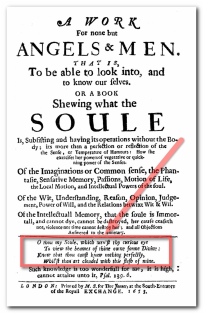
Who else may have had a motive in 1653 to hide its  author's  name (Davies) and to invent  a  long title of his former "Nosce Teipsum" revealing on the title page that we are  "clouded with this flesh" of the author?

Picture

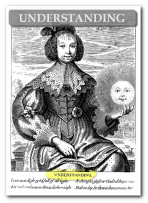
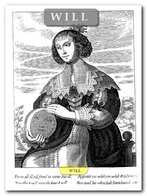
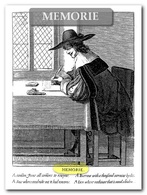
John Davies ' (JD of Hereford) ->"Mirum in modum"(1602) contains a dedicatory poem to William Herbert, The Earl of Pembrooke, (s.Blog 301) in which the author confesses that he had to divide his soule into the 3 virtues "Understanding", "Will" and "Memorie". (Shakespeare's "First Folio" was dedicated to the Earl and his brother]

Astonishingly a curtailed text of "->Nosce teipsum (1599)" of the other John Davies ("Sir" JD ) printed 1653 under a new Title "A work for none but Angels & Men" (without mentioning any author) contains allegorical copper engravings of the 3 virtues ("Understanding", "Will" and "Memorie" s.Faksimile)

Remember that both books ("Nosce teipsum"/"Mirum in modum") [s.Faksimiles.Blog 301] printed in the same year (1602) are dealing with philosophical aspects of the Trinity of the soul .


(Sir.J.D. "Of the Soule of Man",
J.D.of H. "The Soules Shape".(s. Blog 301)

Who else may have had a motive in 1653 to hide his (the author's) name and to invent such a long new title of the former "Nosce Teipsum" revealing on the title page "that you canst know nothing perfectly, whil'st thou art clouded with this flesh" of the author?


Title cover Poem of "A worke for none but Angels & Men" (1653) of John Davies' former "Nosce Teipsum"(1599)

A plausible answer is given in the "Marlowe alias Shakespeare non fiction book":

Marlowe living under "false" identities, finally for decades under the name of the bishop's son "Tobie Matthew", wrote under a multplicity of Pseudonyms or faked pennames of dead or living individuals , including Shakspere or the double "John Davies" (as absurd as it may sound) , died at an advanced age (91) at the English College or House of the Tertians, Ghent, [Belgium] Oct.13th, 1655,

-


VIDEOS – Complete Video Archive:
OPEN  —>   Heading-->  Home -->Videos -- Shorts  -- Posts
                                                                   ->Popular


October 15, 2015

(299)"Nosce teipsum"(1599), the finest philosophical poesie in the English language! Why not written by Shakespeare?

(DOUBLE) JOHN D A V I E S (3)

-----------------------------------

How it is to be understood that the towering poet, thinker and philosopher Shakespeare dared at any time to use the literary genre 

of a philosophical treatise (in poem form)?

____________

 
1599 a high profile poet "John Davies" (J.D.) published  the philosophic poem "Nosce teipsum".-
According to Yale Professor for Philosophy Elias H. Sneath :

"Nosce Teipsum" "...is regarded by competent critics as one of the finest pieces of philosophical verse in the English language, a masterpiece of metrical philosophy."

The poem considers the problem of knowledge and mans capacity to know and the problem of the reality of the soul.  According to J.R.Brink *1

"Nosce Teipsum" provides us with an impressive example of the influence of rhetorical theory upon the structure of a Renaissance poem

Also for Shakespeare, it is possible to find throughout his plays and poetry, the handling of many philosophical problems, themes and ideas, as well as the traces of several philosophical influences and readings.

How can it be explained that at the height of Shakespeare's creative period (1599) an independent person(?) wrote such an outstanding poetic and philosophical work? 

*1) The Rhetorical structure of Sir John Davies 's Nosce Teipsum. The yearbook of English Studies 1974


https://www.youtube.com/watch?v=vD_S7todk3A

Ai Talk/Dialog on the ORIGINAL VIDEO below!


                                             ORIGINAL VIDEO


-------------------------------------------------------

VIDEOS – Complete Video Archive:
OPEN  —>   Heading-->  Home -->Videos -- Shorts  -- Posts
                                                                   ->Popular