
General Description of the BLOG
The blog titled “Marlowe Unmasked — The Multi-Pseudonymity Theory of Shakespeare Authorship” is a personal blog focused on the Shakespeare authorship question, specifically advocating a controversial alternative theory about who actually wrote the works attributed to William Shakespeare. The blog is authored by Bastian Conrad, who presents his own research and arguments challenging the traditional attribution of these works to William Shakespeare of Stratford-upon-Avon.
🧠 Core Concept & Focus
The central thesis of the blog is the Multi-Pseudonymity Theory (MPT), which argues:
Christopher Marlowe, officially declared dead in 1593, forced to feign his death, survived and went on to write under multiple pseudonyms— including “Shakespeare,” Drayton, Chapman, Heywood, Barnfield, Markham, Breton, Wither, Taylor , Lodge.a.o.
The blog posits that these pseudonyms explain stylistic and contextual similarities across a wide range of Elizabethan and Jacobean literature.
It claims this theory provides a coherent explanation for what the author sees as anomalies in the traditional Shakespeare authorship narrative.
This approach places the blog firmly within alternative Shakespeare authorship theories, which are not accepted by mainstream Shakespeare scholars. (For context on the broader authorship debate and how such theories are viewed in academic circles, see discussions like the Declaration of Reasonable Doubt and how traditional scholars regard authorship skepticism. )
📌 Content Structure
The blog comprises a series of numbered posts (some dating back several years) devoted to all aspects of the authorship controversy. Sample post topics include:
Latest Video Announcements:
— E.g., posts promoting YouTube videos that summarize or illustrate points about the authorship debate.Specific Claims About Figures:
— Arguments such as Raph Crane (editor of the First Folio) being a pseudonym of “true Shakespeare/Marlowe.”Comparative Analyses:
— Posts drawing connections between Marlowe and other writers (e.g., George Chapman) within the author’s pseudonym framework.Reflections on Audience Reaction:
— Some entries reflect on why certain videos received limited engagement (even referencing AI in discussion).
The posts mix theory, interpretation of historical details, stylometric claims, and multimedia links, primarily serving as a platform for the author’s own research and advocacy.
👤 About the Author
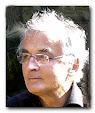
The blog includes an “About Me” section where the author identifies himself (by photo and name) and states his personal belief that Christopher Marlowe is the “true Shakespeare.”
The author (retired professor [emeritus] of the techn.Univ.of Munich,TU) Bavaria, Germany.
This personal profile underscores that the blog is not an academic journal or peer-reviewed publication, but rather the author’s individual research and opinions.
🎥 Multimedia & External Links
The blog regularly features links to the author’s YouTube channel, where personal videos expand on arguments presented on the blog.
These videos are presented as complements to written posts and often are used to illustrate points or summarize key claims.
📜 Theoretical Positioning
This blog is part of the broader field of Shakespeare authorship skepticism, which includes other alternative theories (e.g., Oxfordian, Baconian, Neville, and other hypotheses). Such theories question the traditional attribution to Shakespeare of Stratford, but the claims in this specific blog fall outside mainstream academic fatal consensus. Scholars generally maintain that William Shakespeare of Stratford wrote the works attributed to him, and controversies like this are not considered credible by most academic Shakespeareans.
🧩 Summary
| Aspect | Details |
|---|---|
| Title / Theme | Marlowe Unmasked — The Multi-Pseudonymity Theory of Shakespeare Authorship |
| Primary Argument | Christopher Marlowe survived death and wrote Shakespeare’s works under multiple pseudonyms |
| Author | Bastian Conrad |
| Style | Opinion-based arguments with multimedia support |
| Academic Reception | Not recognized in mainstream Shakespeare scholarship |
| Audience | Interested readers and proponents of alternative authorship theories |
