F I D E S S A (5)Griffins sonnet cycle----------------------Concealed Christopher Marlowe wrote under multiple pennames / pseudonyms(such as B.G r i f f i n or W.Shake-speare).-------------- Sonnet 53 of Griffins "Fidessa" is an absolute blue print of Marlowe‘s destiny![]() It’s a damning verdict for English Literature, that it never succeeded to identify an author B.Griffin having written the distinguished sequence of Sonnets „Fidessa“ 1596 at the peak time of Elisabethan sonnetiers. - The main reason for this failure was, among others, the fact, that is was not possible to fit highly specific contexts of an outstandig poet to the poets biographic situation. For 1596 this would only have been possible if the Marlowe theory would have been contemplated.- Fidessa in all respects literally provides the authentic blueprint of Christopher Marlowe‘s destiny (alias name: Shake-speare) .
Sonnet 53 in FIDESSA
YET AM I STILL THE SAME: BUT MADE ANOTHER, THUS NOT THE SAME: ALAS I AM NO OTHER. ———————-
Is there any other poet (besides Marlowe) in 1596 who could have described himself in such a concise way ?
Of Course, it couldn't be Marlowe, because he was dead! Shouldn't literature rethink the matter? __________ for details s. VIDEO! . —————— VIDEOS – Complete Video Archive: CLICK. —> https://www.youtube.com/@bastianconrad2550 OPEN —> Heading--> Home -->Videos -- Shorts -- Posts ->Popular |
For centuries, the question of Shakespeare's authorship has puzzled readers, scholars, and researchers. This blog presents a comprehensive solution: The Multi-Pseudonymity Theory (MPT). According to my research, Christopher Marlowe — officially declared dead in 1593 — survived and continued to write under multiple pseudonyms.
About Me
May 10, 2016
(417) The unbelievable confessions of the true Shakespeare: B.Griffin in "Fidessa" Part 4
F I D E S S A (4)
—————————————-
Griffins sonnet cycle
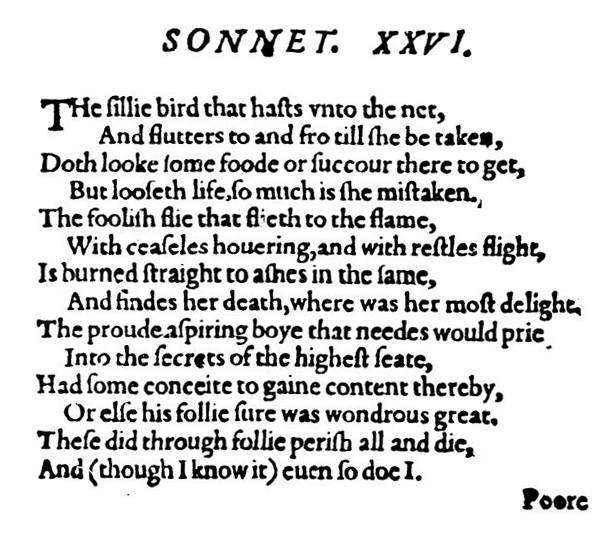
Sonnets 13 and 26 both deal with the autobiographic theme of its author
( Marlowe/ alias Shakespeare) who did expose himself with lethal risks he had not foreseen.
________________________ s.Video below! ____________________________
I die to live in care (XIII)
These did...perish all and die, ...
and even so doe I. (XXVI)
Sonnets 13 and 26 have nothing to do with "Amatory sonnets". Identically they both deal with the same autobiographic theme of its author who did expose himself with lethal risks he had not foreseen. He defends himself against the accusation of his lack of fidelity /loyalty.
He ambigously argues with his inner opposite, his virtue /his Queen. One can assume with considerable plausibility, that the author (Marlowe/alias Shakespeare) sees himself metaphorically in the mirror.
- Sonnet 13 - the foolish Boy that did aspire to touch the glory of hihg heavens Frame, compare me to Leander struggling in the waves, not able to attain his safety's shore
- Sonnet 26- the proud aspiring Boy that needs would pry into the secrets of the highest seats, had some conceit to gain content thereby or else his folly sure was wondrous great
Superficially the last 2 lines in sonnet 13 and 26 differ, they disclose the matured art of Marlowe's (alias Shakespeare's) remarkable verbal dexterity, his incomparable astute use of ambiguity and ambivalence ..
He ambigously argues with his inner opposite, his virtue /his Queen. One can assume with considerable plausibility, that the author (Marlowe/alias Shakespeare) sees himself metaphorically in the mirror.
- Sonnet 13 - the foolish Boy that did aspire to touch the glory of hihg heavens Frame, compare me to Leander struggling in the waves, not able to attain his safety's shore
- Sonnet 26- the proud aspiring Boy that needs would pry into the secrets of the highest seats, had some conceit to gain content thereby or else his folly sure was wondrous great
Superficially the last 2 lines in sonnet 13 and 26 differ, they disclose the matured art of Marlowe's (alias Shakespeare's) remarkable verbal dexterity, his incomparable astute use of ambiguity and ambivalence ..
(416) How devastating the Academic Stratford Dogma has misguided literary studies.: B. Griffin, " Fidessa" part 3
F I D E S S A (3)
——————————-
Griffins sonnet cycle
Fidessa" as a prime example
of how devastating the academic Stratford dogma
has misguided literary studies ..(s.video below!)
The 62 sonnets of Fidessa by B.Griffin (1596) represent a remarkable rare piece of poesie.
Apparently at present only a single exemplar in the Bodleian Library does exist! It is not certain, that the prename "B." of "Griffin" was „Bartolomew“. Alexander Grossart in 1876 published a first reprint (50 private copies ). He regretted he could add nothing to the poets empty life and biography, since every probable source of information has been explored without success. All information we have is Fidessa, a small volume of "Amatory Sonnets", as Grossart called it.
All 62 Sonetts of the poem cycle "Fidessa" can and must be seen as a continuous poetic confrontation between the author himself (concealed Marlowe/ alias Shakespeare) and his destiny.
Various sonnets of "Fidessa" have been identified as putative "plagiarisms" of other authors: The third sonnet in Fidessa, beginning "Venus and yong Adonis sitting by her", was reproduced in 1599 in "The Passionate Pilgrime" (by W. Shakespeare), the Sonnet 35/39 in "Delia" (Samuel Daniel) .
Sonnet XXXIII (33 s.Faksimile ) clearly illustrates the situation of the author (Christopher Marlowe/alias Shakespeare). As in Shakespeare's sonnets the author uses the method of repetition (doubling) of specific word to highlight the contextual importance:
He has to hide(1) his head (2) and live (3) alone as if he were dead, with no identity, no face(4)
Apparently at present only a single exemplar in the Bodleian Library does exist! It is not certain, that the prename "B." of "Griffin" was „Bartolomew“. Alexander Grossart in 1876 published a first reprint (50 private copies ). He regretted he could add nothing to the poets empty life and biography, since every probable source of information has been explored without success. All information we have is Fidessa, a small volume of "Amatory Sonnets", as Grossart called it.
All 62 Sonetts of the poem cycle "Fidessa" can and must be seen as a continuous poetic confrontation between the author himself (concealed Marlowe/ alias Shakespeare) and his destiny.
Various sonnets of "Fidessa" have been identified as putative "plagiarisms" of other authors: The third sonnet in Fidessa, beginning "Venus and yong Adonis sitting by her", was reproduced in 1599 in "The Passionate Pilgrime" (by W. Shakespeare), the Sonnet 35/39 in "Delia" (Samuel Daniel) .
Sonnet XXXIII (33 s.Faksimile ) clearly illustrates the situation of the author (Christopher Marlowe/alias Shakespeare). As in Shakespeare's sonnets the author uses the method of repetition (doubling) of specific word to highlight the contextual importance:
He has to hide(1) his head (2) and live (3) alone as if he were dead, with no identity, no face(4)
The poem of "Fidessa" clearly needs a theory of who was the author providing us with an explanatory framework for its interpretation.
The "Stratford Dogma" had catastrophic consequences, since it blocked all ideas to approach an authorship solution!
_____________
——-
415) The incredible revelations of the "true" Shakespeare: B. Griffin. Fidessa Part.2
F I D E S S A (2)
Significant biographical informations in Fidessa should lead to the conclusion that the name “Griffin” (a fabulous animal having the head and wings of an eagle)
was used as Marlowe/alias Shakespeare's pseudonym.
s.Video below!
_______
A certain B.Griffin wrote a“ little volume of Sonnnets”, a series of 62 poems entitled “Fidessa, more chaste than kinde, London”, 1596.
No trace of a poet B.Griffin has ever been discovered over centuries.
To obtain biographical information of Griffin, we are dependent on the contextual information extractable from Fidessa..
What conclusions can we derive from Fidessa?
“Fidessa” is an artifial word derived from
a) “fides” (faith, confidence , trust in a person or thing – or an obligation of loyality, or fidelity to a person, a promise, or an engagement) and
b)"...essa", a female ending thus transformed into a metapher of a female subject / godess, with which the poet enters a dialogue .-This is reminiscent of the philosophy of Shakespeare e.g. in "The Twelfth Night" (II / 5), ("Put thyself into the trick of singularity. She [as his virtue] ran thus advise thee that [she] sighs for thee").
The situation of the author clearly indicates that the author is and has been in a most dangerous, vexing and conflicting life situation of loyalty and confidence. The poems surpass Shakespeare's sonnets in some places in its poetic brilliance and contain substantial biographical notes on the authors specific situation:
Significant biographical informations in Fidessa can hardly lead to any other conclusion than that the name “Griffin” (a fabulous animal having the head and wings of an eagle) was used as Marlowe/alias Shakespeare's pseudonym. This can be recognised in virtual all sonnets :(s.examples subsequent. blogs)
Ai Video Dialog (by NotebookLM)
on the ORIGINAL VIDEO (below !)
O R I G I N A L - VIDEO
May 08, 2016
(414) The Shakespeare authorship theory is falsely rejected...... ["Fidessa" part 1]
F I D E S S A (1)
—————————
Griffins sonnet cycle
... a coherent interpretation.
A certain B.Griffin wrote a series of 62 poems entitled “Fidessa, more chaste than kinde, London”, 1596./ (“little volume of Sonnnets”). Initially there is a dedication “To the Reader” entitled “To the gentlemen of the Inns of Court”, from which it can be inferred that Griffin himself had some sort of relations to the Inns of Court, but no trace of him has ever been found in the registers. Of an English poet B.Griffin virtually nothing is known up to now beyond a single "poetic masterwork", the sonnets of "Fidessa" (s.Faksimile title 1596.) There are highly conspicious inconsistencies, which have never be explained adequately: Some examples: 1.) Why there exist virtually no biographic traces of B. Griffin in England? 2.) Is it reasonable to think that such a highly gifted poet did write only a singular literary work? 4.) Why no literary expert ever tried or succeeded, to assign the contextual contents of "Fidessa" to a specific contemporous author and his biographic situation? 5.) Is it reasonable to think that the poet Griffin was able to write his very first literary work ("first fruite of any my writings") already at that high level of poetic artistry? 6.) How can it be that Sonnet 3 of Fidessa (1596) beginning "Venus and young Adonis sitting by her" also appeares as Shakespere's first work (op.1) as well as a Sonnet in The "Passionate Pilgrim" , 1599? 7.) What may have been the motiv of Shakespeare (whoever the author was!) to significantly alter the lines 9-13 of Griffins Fidessa (1596) in "The Passionate Pilgrime"(1599) s.Blog 494)
The at present most plausible explanation for the total failure of the "Academic Shakespeare Expertise", to search for a consistent theory of these bizarre "Fidessa" observations, lies in the fact, that the most logicall thesis was rejected from the beginning: The Marlowe/alias Shakespeare Thesis : a covert "false flag" operation of the English Crown and State helped to feign Christopher Marlowe's death for life-saving reasons 8.) Why Shakespeare can be clearly identified as the author of "The Passionate Pilgrime [s.Faksimile] on the title page", but other identified authors such as B.Griffin, C.Marlowe or R.Barnfield are not mentioned? ________________________ During his concealed "second" live he accepted to write under a multiplicity of pseudonyms /pennames such as Griffin, Barnfield , Shake-speare and so on!) _______________ Ai VIDEO - DIALOG on The Original VIDEOS (1 &2) O R I G I N A L --V I D E O- 1
O R I G I N A L --V I D E O- 2 |
May 03, 2016
(413) Diana Price did not tackle the actual necessary step of the Shakespeare authorship problem,
Diana Price "scientifically" involved
in unveiling the "false" Shakspere…
but…
…not in revealing the "true" Shakespeare. - Inexcusable!
Both problems belong intrinsicly together.... and should be answered together!
----------------------------------
....She didn't dare to imagine the unimaginable: that a multiplicity of contemporary poet names were pseudonyms or pennames (e.g Wither , Cary , May, Davenant Sylvester, Drayton, Beaumont , Fletcher , Heywood , Shakspeere , Massinger...)
of the single poet geniius ,"true" Shakespeare.
| Some of the true Shakespeare's pennames In George Wither." The Great Assises " |
Diana Price, author of the book "Shakespeare’s Unorthodox Biography: New Evidence of an Authorship Problem", gave a lecture (s.video) on the occasion of the 400th anniversary of Shakespeare of Stratford’s death , at the Berkeley Street Theatre in Toronto.
Historically the Shakespeare authorship problem never felt obliged to proceed to the second step researching the actual question:” Who did it, [if not William of Stratford].?
Only a minor community of intellectuals, sceptics, scholars (Non-stratfordians) entered the second stage. One of todays best known „Non-Stratfordian“ scholars is Diana Price. Her research adds to longstanding conclusions that William Shakspere of Stratford by no means can have been identical with William Shakespeare, the creator of Hamlet. -
Interestingly Price has never aligned herself ( as far as I can see) with any one other possible candidate, even though she got this far into the authorship issue. Unfortunately she nevertheless did never privilege one candidate over another.
Her website tells that she has been invited to all "Oxfordian" conferences, but she doesn’t go because she does‘t want to be perceived as favoring one particular candidate over another . She generally doesn’t take questions on the case for or against Oxford, or Bacon, or any of them. When she is asked , „Was it Shakespeare or was it Oxford?" she frames the question differently "Was it Shakespeare or was it not Shakespeare?"
How can Diana Prize expect that a yet unknown poet can be discovered from oblivion? the answer to the first stage seems easy (considerung the immense collective efforts done ) compared to the answer of the second stage. –
Historically the Shakespeare authorship problem never felt obliged to proceed to the second step researching the actual question:” Who did it, [if not William of Stratford].?
Only a minor community of intellectuals, sceptics, scholars (Non-stratfordians) entered the second stage. One of todays best known „Non-Stratfordian“ scholars is Diana Price. Her research adds to longstanding conclusions that William Shakspere of Stratford by no means can have been identical with William Shakespeare, the creator of Hamlet. -
Interestingly Price has never aligned herself ( as far as I can see) with any one other possible candidate, even though she got this far into the authorship issue. Unfortunately she nevertheless did never privilege one candidate over another.
Her website tells that she has been invited to all "Oxfordian" conferences, but she doesn’t go because she does‘t want to be perceived as favoring one particular candidate over another . She generally doesn’t take questions on the case for or against Oxford, or Bacon, or any of them. When she is asked , „Was it Shakespeare or was it Oxford?" she frames the question differently "Was it Shakespeare or was it not Shakespeare?"
That is remarkable.- One wonders.....
...why at her absolute certainty of the first stage (that William of Stratford was not the creator of Hamlet) , she never seem to have felt the need to enter the second stage?
How can Diana Prize expect that a yet unknown poet can be discovered from oblivion? the answer to the first stage seems easy (considerung the immense collective efforts done ) compared to the answer of the second stage. –
The problem is not the "false William" but the "true"!
------------------------------------
Diana Price
Shakespeare's Unorthodox Biography
(412) The ridiculousness of Shakspere's authorship disclosed! (Professionally made Video , part 1)
Richard A. Wagner
Baconian
…has announced to produce a 4-part TV series which delves into the Shakespeare Authorship Issue .
study V I D E O (part 1) below!!
_________________
Based on his book “The Lost Secret of William Shakespeare” [ freely available online] Richard Allan Wagner has started to produce a 4-part TV series which delves into the Shakespeare Authorship Issue .
The professionally made part 1 now available, exposes well known facts and arguments why there is not enough evidence to support the traditional claim that William from Stratford was involved with the authorship of the plays and poems attributed to the name "William Shakespeare".
One can fully agree with the arguments of Video Part 1 “Exposing the Shakespeare conspiracy“ which enlightens us who the author was not!!!.-
Wagner summarizes all the evidence (developed over a century), that William of Stratford can not have been the author of Othello or Hamlet.
The professionally made part 1 now available, exposes well known facts and arguments why there is not enough evidence to support the traditional claim that William from Stratford was involved with the authorship of the plays and poems attributed to the name "William Shakespeare".
One can fully agree with the arguments of Video Part 1 “Exposing the Shakespeare conspiracy“ which enlightens us who the author was not!!!.-
Wagner summarizes all the evidence (developed over a century), that William of Stratford can not have been the author of Othello or Hamlet.
Since Rick Wagner is a „Baconian“ and a Freemason , I am afraid, that the (promised) upcoming parts are not as easy to digest, …but already now its certain that - beyond all cypherology - the "true Shake-speare" was an influential forerunner ("predecessor") of Masonic philosophy.
Exposing the Shakespeare
Conspiracy part 1.
Exposing the Shakespeare
Conspiracy part 2.
April 28, 2016
(411) The adulatory "media pabulum" (Bardolatry) for William of Stratford during his anniversary
B A R D O L A T R Y
...mainly written by a journalistic juvenile "pseudo-expertise" with always newly copied concoctions, makes it necesssary also to point to opposing views (s.Video)
____________________________
Basically science is about doubt.- Someone who does not doubt will not put essential questions .
Usually Research starts with developing and testing a "working hypothesis" challenging current paradigms.
e. g.
a) Is William Shakspere (Stratford) identical with William Shakespeare
(Author of "Macbeth" or "The Winters Tale"?
b) Was Marlowe’s murther feigned in reality?
The current mighty "media pabulum" of an adulation of William of Stratford (Bardolatry) during his anniversary (apr.23, 400th year of death) , mainly written by a journalistic juvenile "pseudo-expertise" with always newly copied concoctions, makes it necesssary also to point to opposing views ....
b) Was Marlowe’s murther feigned in reality?
The current mighty "media pabulum" of an adulation of William of Stratford (Bardolatry) during his anniversary (apr.23, 400th year of death) , mainly written by a journalistic juvenile "pseudo-expertise" with always newly copied concoctions, makes it necesssary also to point to opposing views ....
____________________________
Conversation between Mark Rylance und Sir Derek Jakobi:
——————————————-
——————————————-
VIDEOS – Complete Video Archive:
OPEN —> Heading--> Home -->Videos -- Shorts -- Posts
->
(410) The Shakespeare Authorship Question: An abysmal academic taboo ! (Video)
Virtually all
Shakespeare authorship inconsistencies
could be resolved , ...
... if the World would be ready to accept the complex "Marlowe" authorship thesis of a
“Covert Operation of the State and Crown"
a textbook conspiracy theory
—————-
a recent Video creation intended to contribute to the 400th anniversary of
the death of William Shakspere, Stratford (23.April 2016) .
https://youtu.be/9fdgR2OubvM?t=1
----Marlowe's death, a plot ( a real conspiracy !) was feigned with support of the Crown (William Cecil).
The defamed national Poet, Dramatist and Superstar of London's Theater, Christopher MARLOWE
- according to the law threatened with death, charged of treason-
was forced to permanently give up his name and identity, to live undercover and write under many pennames/pseudonyms (incl. Shakespeare) throughout his life.-
The totally covered situation reminds one to current practices of hidden false flag "Insider"operations (such as WTC-7).
Virtually all Shakespeare authorship inconsistencies could be resolved , but only when the world is ready to accept the complex "Marlowe" thesis of A "Covert Operation"
(compare it to 9/11 or the Kennedy-Assassination)
(by definition strictly designed that nobody will be able to disclose it....)
April 06, 2016
(409) Shakespeare's empty grave. Why the missing skull ?
Shakspere's skull missing
(...in his Grave...)
Why the global media coverage did not touch the century old Shakespeare authorship question (SAQ) a single time, possibly related to this result?
__________________
One should realize that the more amazing thing would have been if the skull were found to be intact.
____________
Archaeologists recently scanned for the first time (using GPR, Ground-Penetrating Radar) the grave of William Shakespeare at England's Holy Trinity Church in Stratford-upon-Avon.- The findings were featured in a documentary "Secret History: Shakespeare's Tomb" on Britain's Channel 4 TV and had a great media coverage.- They made a head-scratching discovery:
Shakspere's skull missing
(also no other bones were identifiable(?), but astonishingly not mentioned).
Time has not yet come for orthodox Stratfordians, mainly literary academics, to rethink about the life of the author of Shakespeare's works with the possibility of an entirely different paradigm deliberately dismissed.
Given the facts abouts the empty grave why has the global media coverage not touched the century old Shakespeare authorship question (SAQ) a single time? (read Blog 345 The SAQ: The most perverse , irrational academic Taboo ever...)
April 03, 2016
(408) The "true" Shakespeare . (Polimanteia , Part 6 )
P O L I M A N T E I A (7)
The Author
Christopher Marlowe :
The jew of Malta
(printed 1633)
|
„The Jew of Malta", was a successful play of Christopher Marlowe, which has been premiered in London 1592 with 36 performances during 1591/92.. It opens with a prologue spoken by Machevill (Machiavelli) indicating an allegoric autobiografic presentation of Marlowe's change of identity, his survival and his frequent concealed returns to Englands.-
(»Machevil« has been proposed as the anagram »Ch. M. Alive«) of the living Christopher Marlowe.
The play wasn't published until 1633, long after all those who would have been involved in court saving Marlowe from the Star Chamber, were dead.
It is of note that Marlowe was referred to as "Machevill" by his friends.(T.Nashe, R.Greene, G.Harvey) It is not known at what time the prologue was added to the play, most likeley 1601 after a noticeable revival and textual revision of the play. For several reasons the play was printed for the first time only in 1633.
The first words of the prologue clearly clarify Marlowe’s situation: The world believes that he is dead, (»albeit all the world think Machiavel is dead, but in reality yet was his soul but flown beyond the Alps; and , now the Guise is dead, is come from France and frolic with his friends. … and let them know that I am Machiavel« .
The historical Machiavelli was dead at that time for nearly 100 years. Machevil , who plays no role whatsoever within the play. Marlowe expresses in the prologe, that
«, »to frolic with his friends« »to some perhaps my name is odiuos (»but such as love me, guard me from their tongues« »let them kow that I am Machiavell »admired I am of those who hate me most«, »though some speak openly against my books«).
Marlowe is fully aware that some speak openly against his book«),. (»Yet will they read me and thereby attain To Peter’s chair« they do not want to conflict with religion, he count religion but a childish toy »and hold there is no sin but ignorance«). He reflects, wich rumors my have distributed his alleged murder (»Birds of the air will tell of murders past (»I am ashamed to hear such fooleries«). (»Let me be envied and not pitied!«). (»But whither am I bound? I come not, I, To read a lecture here in Britanie, But to present the tragedy of a Jew«).
______________________
In »Polimanteia« the author describes the danger, caused by equating him with Macchiavelli.- He sees this as the main reason for his fateful doom (»Machivell hath obtained so much credit amongst the greatest states men of all Europe, Atheisme hath perswaded the world of my death«). No comparison could have been been more harmful for him.(»Cann any counsel be more pernicious to a Common wealth?«... »which he never meaneth to imbrace in trueth«
.
This statement can easily recognize Marlowe as the author of "Polimanteia".
.
This statement can easily recognize Marlowe as the author of "Polimanteia".
Who else would have had in 1594 reason to accuse Machiavelli as the cause of his "supposed" demise?
VIDEOS – Complete Video Archive:
OPEN —> Heading--> Home -->Videos -- Shorts -- Posts
->Popular
March 31, 2016
(407) The confessions of the "true" Shakespeare. ( Polimanteia Part 5 )
P O L I M A N T E I A (6)
The confessions of the "true" Shakespeare.
"...since the day of my first birth,
since the time I was called by Religious Name..."
In "Polimanteia" (1595) the author W.C., which cannot safely be identified, wrote a remarkable "speech": "A religious Speech" dedicated "to Englands Children", i.e. to the next generations to come.
[The last speech is a "Loaylties speech to Englands children]-
In his introductory dedication to Robert Devereux [The Earl of Essex] the self-confident author W.C. declares, that he "takes upon himself Englands Person and speaks like a Commonwealth" and that the Earle should take the paper as "the countries talke".
The author gives the Earl of Essex, Robert Devereux some remarkable facts to understand about himself, that:
1) he foresaw that all miseries, harmes, wants, tragedies and whatelse soever the world deemed hatefull, should bee falsely suposed to be triggered by him ("proceede out of his wombe")
2) since the day of his first birth
3) since he first "shined weekely" in these coastes (SOED "shine:" of persons to be brilliant in ability, character, achievement or Position, to be eminent, to excell [old engl.]
4) since the times he was called by a Religious name. - He has lived now so long, that he finds it true, that he will be pardoned...and he concludes this sentence by saying that he never caused, either kingdome to be desolate, prince to bee distressed, people to despaire or any private person to be malecontent.«
-------------------
[The last speech is a "Loaylties speech to Englands children]-
In his introductory dedication to Robert Devereux [The Earl of Essex] the self-confident author W.C. declares, that he "takes upon himself Englands Person and speaks like a Commonwealth" and that the Earle should take the paper as "the countries talke".
The author gives the Earl of Essex, Robert Devereux some remarkable facts to understand about himself, that:
1) he foresaw that all miseries, harmes, wants, tragedies and whatelse soever the world deemed hatefull, should bee falsely suposed to be triggered by him ("proceede out of his wombe")
2) since the day of his first birth
3) since he first "shined weekely" in these coastes (SOED "shine:" of persons to be brilliant in ability, character, achievement or Position, to be eminent, to excell [old engl.]
4) since the times he was called by a Religious name. - He has lived now so long, that he finds it true, that he will be pardoned...and he concludes this sentence by saying that he never caused, either kingdome to be desolate, prince to bee distressed, people to despaire or any private person to be malecontent.«
-------------------
If the author talks about his "first" birth, then there must have been a "second" birth. - This would best fit with the assumption, that the author was Marlowe, who had to accept a second birth after changing his identity.
For countless reasons the "Religious speech" (as well as the "Loyalties Speech") to "Englands Children" reveal that there can be no doubt whatsoever
the author was Marlowe/alias Shakespeare. - This insight, however, has to be denied as long as one overlooks the concealed Marlowe / Shakespeare Authorship Problem.
Subscribe to:
Posts (Atom)