November 07, 2016

(483) Anthony Munday / Lazarus Pyott (L.P.): early "pseudo-nymous identities" of the "true" Shakespeare ?

ANTHONY  M U N D A Y (3)

Connections between Shakespeare‘s ,"The Merchant of Venice" and Pyott‘s „The Orator“.

  
The Second Booke of Amadis de Gaule (1595)
The Orator: Handling of hundred severall discourses(1596)

​In 1963 C.T.Wright presented the case that Anthony Munday has to be identified with  his pseudonym "Lazarus Pyott," (L.P.) whom most scholars regard as a separate unknown writer.-
From Encyclopedias  you learn that highly prolific Munday (born 1560!! [not 1553]) seminary student, actor, nobleman's page, government spy, poet, playwright, translator, traveller,  hereditary member of the Drapers' guild, "servant to the City,"  wrote ballads, dialogues, moral treatises, a Mirrour, pamphlets, pastorals, a travel book, plays, pageants, a chronicle, additions to the Survey of London, chivalric romances etc..

In 1596 a highly interesting book "​The Orator" translated from the French Book "Epitomes de Cent Histoires..."(1581) of Alexandre Sylvain (van den Busshe) "englished by L.P." appeared with 100 "legal" discourses "in forme of Declamations: Some  of the Arguments (...) of the Authors own invention: part of which are of matters happened in our [his] age.


Declamation Nr.95 interestingly deals with the Trial Scene 
of  Shakespeare's "The Merchant [The Jew] of Venice
For several reasons Shakespeare scholars agree that "The Merchant of Venice"  has been written in 1596, at the  time when  the translation of  the "Declamation nr 95"
by Lazarus Pyott was published,
-------------
 Wouldn't it be too much of a coincidence if there were no intrinsic connections between Shakespeare, the author of "The Merchant of Venice"  and Lazarus Pyott [seen as a penname of Anthony Munday]?


VIDEO on MUNDAY


-------------------------

VIDEOS – Complete Video Archive:
OPEN  —>   Heading-->  Home -->Videos -- Shorts  -- Posts
                                                                   ->Popular

 .

--------------------------


VIDEOS – Complete Video Archive:
OPEN  —>   Heading-->  Home -->Videos -- Shorts  -- Posts
                                                                   ->Popular

(482) Anthony Munday: Another Shakespeare Candidate? An early pseudonymous (borrowed?) identity or penname? (2)

ANTHONY  M U N D A Y  (2) 

 is often done down by being constantly referred to a “lesser playwright”.

 If you  realise that this  is not the case, many things change!


Paradoxes against common opinion 1593


The defence of Contrarities  -Declamation
title 6


The defence of Contrarities  -Declamation
  title 9
 If these epithets had not been constantly applied to Munday, he would have been revealed as Shake-Speare over a hundred years ago, when the only handwritten Shake-Speare play "Sir Thomas More" discovered so far was analysed and found to be in Munday’s handwriting.

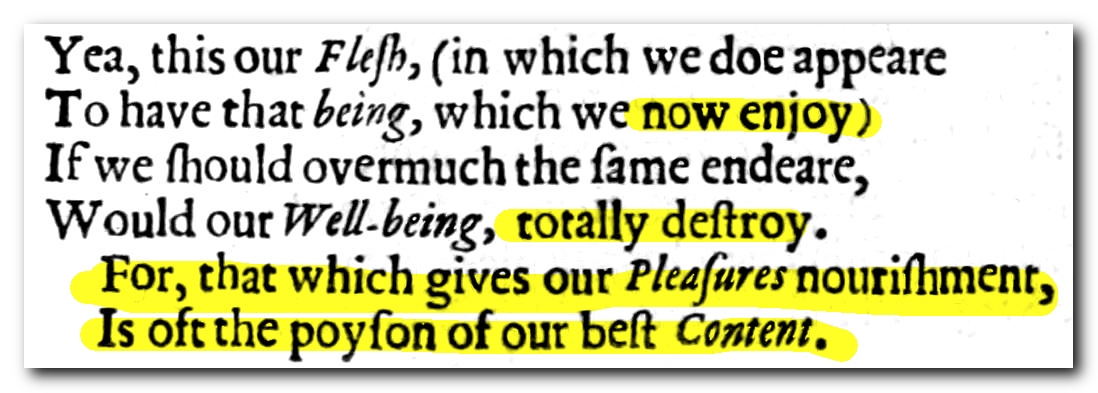
One of Marlowes most significant  life Mottos are "Paradoxes" or  "Contrarities"  (Quod me nutrit me destruit) s.Blog...

It cannot be  purely coincidental that in the year of Marlowe's disappearance 1593 a booklet entitled 

"The Defence of Contrarities. Paradoxes against common opinion" [Marlowe's Life Motto or Philosophy, on his Portrait)]  

 appeared,  in wich an unidentifiable translator  A.M.  (Experts recognized  Anthony  Munday )  declaims…


... that for him that has lost his wordly honours and preferments he ought not to be greeved…
in nr.6 (of his 12 declamations s. Faksimile) or

  that for  the Exiled  it is better to be banished than to continue in liberty!
  in nr.9, (s-Faksimile)

                                               MUNDAY Declamation ( 2 examples 6 & 9)


The textual content of Mundays  declamations 
 from 1593, the year of disappearance of Marlowe,  (suggest  a direct connection between Munday and Marlowe
(here  2 examples 6 & 9?) 

but study also this full Video (25 min)


————————————————-

VIDEOS – Complete Video Archive:
OPEN  —>   Heading-->  Home -->Videos -- Shorts  -- Posts
                                                                   ->Popular


(481) Anthony Munday: Another Shakespeare Candidate? An early pseudonymous identity or (borrowed?) penname [1]

ANTHONY   M U N D A Y (3)
2 poets of  the same age,  Munday - Shakespeare

 For the first 3 decades the one (M) could not put his quill pen down for a moment  
                     and the other (S) didn't yet write anything .
Anthony R. Munday's --------->     "Anonimus" 2016


                                          Anthony R.Munday (A.R.M.)


In 2016 Anthony R. Munday [A.R.M] (claiming that the English poet Anthony Munday [A.M.] born in London in 1560(!) is an ancestor of him)  wrote an interesting book

  "Anonimus - Anthony Munday's Shakespeare"  

proving on the balance of probability that AM is identical with the author of the works written under   name Will Shake-Speare.

I agree with A.R.M that highly prolific A.M. could not stop writing, could not put his quill pen down for more than a moment. His recorded output is astounding, at almost 100 works (excluding the Shake-Speare canon), and that he may have written much more under ever changing pennames [...think about N.Breton, W.Gager, G.Wither. W.Webbe, J.Clapham, L.Wright a.o.]
------
He was only 16 years old when he first appeared in print. He must have been well read, known  many thing about other countries – particularly Italy  – and would need some knowledge of the royal courts and foreign languages, including Latin and Greek, French, Italian, Spanish. He would also need a history of written works prior to the appearance of the Shakespeare canon. (A.M.)


Anthony Munday possessed all these qualifications. You may ask yourself: “How has A.R.M. found evidence that everyone else has missed for nearly 400 years?”"

A.R.M. claims this his book is not an academic tome., but a story of Munday's life:  Some content  - he writes- is true, some is speculative truth and some is [unfortunately] honest fictional interpretationThe author believes it is as near to the truth as he can make it.
               
 A.R.M seems to be on the right track ! There is, however, still a long way to go!  

------------------------------------------


————————————-

VIDEOS – Complete Video Archive:
OPEN  —>   Heading-->  Home -->Videos -- Shorts  -- Posts
                                                                   ->Popular


October 27, 2016

(480) Shakespeare the adorable teamplayer? Is absurdity even possible to increase?

GARY  T A Y L O R  

Is absurdity even possible to increase?

___________________

Gary Taylor
The Guardian  on October 23 reported , that  Shakespeare’s collaborative work is even greater than  estimated over the last decades. - Using computerised text tool analysis 23 US/english academic Shakespeare scholars have contended that 

Shakespeare‘s collaboration with other playwrights  was far more extensive than has been realized before.

Shakespeare expert Prof. Gary Taylor told the Guardian that they underestimated the amount of Shakespeare’s collaborative work: In 1986  8 (>20%) of 39 plays were identified on their title pages as collaborative, in 2016 it were 17 of 44 Plays (>38%)

Henry VI parts 1, 2 and 3 are among those  plays that they now believe contain writing by Christopher Marlowe

They had been able to verify Marlowe’s presence strongly  and clearly enough.-
  Gary Taylor:  We can now be confident that they [Marlowe & Shakespeare] didn’t just influence each other, but that they worked with each  other. "Rivals sometime collaborate
We have added   evidence from  phrases that occur in the passage being tested. 
Marlowe’s works contain many more such parallels than any other playwright,” Taylor added.

How could such an absurd/ bizarre assumption of  "Shakespeare as a teamplayer"(s.Blog 448)  arise, derived exclusively on statistical contextual analysis.  

- Is absurdity even possible to increase?

No one to this day can imagine and has systematically checked, wether most of  the supposed co-authors (such as Peele, Munday, Heywood, Dekker, Middleton, Fletcher , Wilkins, Chettle   [and others]) were pseudonyms or taken as pennames from living or deceased figures by the true author, alias Marlowe [read Summary]

    
Gary Taylor Professor of English
Florida State University
       Gary Taylor on Collaboration


.-------------------------------------------------------------------------

VIDEOS – Complete Video Archive:
OPEN  —>   Heading-->  Home -->Videos -- Shorts  -- Posts
                                                                   ->Popular

(479) In 1645 the"true" Shakespeare, still alive, disclosed the authorship conspiracy and his "false"frontman

G E O R G E   W I T H E R (9)

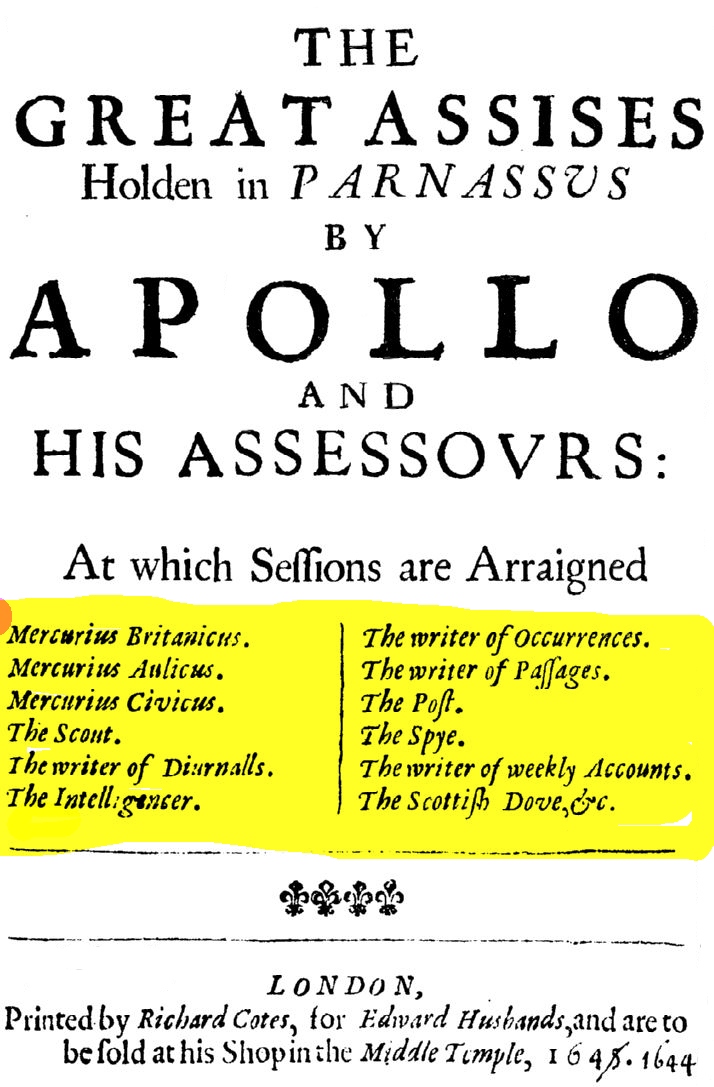
The poetical satiric-allegoricall law-suit "The Great Assises (1645)" 

can only be understood when accepting a 

In  1645 the "true" author wished that the "Typographie", an instrument of art, had never been used! [i.e. that his "artificial" penname Shakespeare had been adapted "typografically"  from the real William Shaksper, Stratford] who possessed ..... [s.below 


                          ... a pernicious head
                          ... who has in Art no interest
                          ... an employed  Paper-waster
                          ... a Mercenary soule
                          ... a Poetaster
                          ... a Mercinary pen-men of 
                                                         the Stage
                          ... a Delinquent  here:

Shakespear       ... a Mimicke
                           ... an Errour of the Muses
                           ... an Abortive Witt
  

                           ... a foule fountain of abuse
                           ... a reptile equivocally bred
                                        under
  some  hedge

--------------------------------
Characterisation of the
 "false Shakespeare" from Stratford.


It indicates that from the early beginning  there were advocates of the Shakespeare authorship plot claiming that 

it was a “matter of Typography”. -   

Different spelling implied, as R.C. Churchill ["Shakespeare and his betters" 1958) puts it, "that there must have been two men: one, the Stratford man whom they mostly call 'Shaksper' or 'Shakspere', the other the real author  whom they call 'Shakespeare' or 'Shake-speare' (with the hyphen)."  

Twenty years after the appearance ot the "First Folio" in 1644 the anonymous author of "The Great Assises" [the true Shakespeare alias Torquato Tasso, alias Marlowe, alias  alias alias ...] wished that an instrument of art (the "Typographie") had never been used! [Shakspeare versus Shak e speare] which characterized  "the false Shakspeare" as a mercinary pen-men of the Stage, as a delinquent , a Mimicke , as an errour of the Muses, as an abortive witt, as  foul fountain of abuses, as a Reptile bred under some hedge,, not in geniall bed, where lovely art  with a brave wit conjoyn'd engenders poets of the noblest Kind  [the "true Shakespeare"]

SHAKE______
 SHAK_______________ 

__________________________
VIDEO  -  GEORGE WITHER (37min)
      
                                     https://www.youtube.com/watch?v=euL6_WHv9OI


VIDEOS – Complete Video Archive:

OPEN  —>   Heading-->  Home -->Videos -- Shorts  -- Posts
                                                                   ->Popular


October 24, 2016

(478) The "Great Assises" can only be understood when accepting a Shakespeare/Marlowe Authorship conspiracy!

GEORGE  W I T H ER (9)

A late, highly allegorical disclosure and self defense of the yet living "true Poet Genius" [Shakespeare  alias Marlowe]

and his arguments, activities, idols and writings, 

(incognito Marlowe alias Shakespeere / Drayton / Heywood, 

/Wither , / Sandys, / Taylor a.o...)


+++++++++++++++++++++++++


"The Great Assises"  has long been attributed to George Wither as the author, but this is by no means certain. (Joseph Haslewood 1810 discussed the identity of the author and stated that he "must leave it attributed to anon." )

Content:
In an allegorical  lawsuit of a divine "supreme"  Court ("The great Assises) of Apollo  the italian Poet Torquato Tasso (1544 – 1595)  is ordered to execute Apollos just commands,... to bring in alive or dead each one that... had defiled the presse with Pamphlets scarrilous, and vile, traduced with malignant Spirits and Person of honorable worth and merits.

Tasso [alias dead Marlowe]  has to disclose  12 malefectors, his own substitues or sub-identities  which are tried and hauled before a jury of poets (12 of his own pseudonymous substitutes, his poetical identities, William Shakespeare (s.Blogs ...),  George Wither (s.Blog 257/258, Blogs 352-356, Blogs 469-474) , Thomas Heywood  (s.Blogs 331,471).)  Michael Drayton  (s.Blogs 274, 322-323,) Thomas  May (Blog   xxx)  George Sandes (Blogs 223, 238...)   Josuah Sylvester, (Blogs 451- 455) Beaumont / Fletcher etc.

Both the Delinquents (Malefactors) and   the Poets (Jurors persons of honorable worth ), the critics, accuse one another; Apollo almost invariably defends the poets.


V I D E O--DIALOG (by NotebookLM)


----------------------------------------------------------

VIDEOS – Complete Video Archive:
OPEN  —>   Heading-->  Home -->Videos -- Shorts  -- Posts
                                                                   ->Popular

October 22, 2016

(477) David Kathmans insipid denial of a Shakespeare authorhip controversy

 D A V I D  K A T H M A N

For  him the  Marlowe /Shakespeare idea has not even a fringe status 

within the  field of Shakespeare authorship studies -  

What an Arrogance!

David Kathman

David Kathmans Chapter 110 in Vol.2


David Kathman
at present  is a chartered Financial Analyst who makes his living as a mutual fund analyst for Morningstar in Chicago.

He has a PhD in linguistics from the University of Chicago.- The majority of his scholarly and media work  over the past decade deals with Shakespeare, especially  the Authorship controversy.- 

He is an ultra-conservative /ultra-orthodox Shakespearean / Stratfordian who  believes that doubt about the authorship  is not justified and that... 
          
 ...an authorship question does not exist in reality!. 

In Volume 2 of the   Handbook "A Cambridge Guide to the Worlds of Shakespeare" Kathman with his "longstanding expertise as a denier" of a Shakespeare authorship problem obviously was commisioned to write the 


His chapter argues against Edward de Vere, 17th Earl of Oxford and neither  discuss nor  mention even once  the authorship candidate Christopher Marlowe, even though recent monographies (e.g. C.Hoffman, S.Blumenfeldt, D.Pinksen, B.Conrad a.o.) and media contributions on  the Marlowe issue are worth discussing.

Kathmans attitude reminds on the 9/11 Commission Report (2004 Chief Editor Philip D. Zelikow) which analyzed the cause of the rapid  symmetric fall of the twin towers hit by 2 planes but didnt even mention the symmetrical vertical free fall of a third skyscraper (WTC-7) with no plane hitting the building. 
       An inexcusable trend-setting inner attitude...

David Kathman belongs to the so-called  "industry in denial".- 

Compare his preconceived opinion below (expressed in the last sentence of his chapter)  with  the "Rebuttals to the Industry

 
Last sentence (conclusion) of Kathmans chapter 110.


-----------------------------------------------------------------------------
VIDEOS – Complete Video Archive:
OPEN  —>   Heading-->  Home -->Videos -- Shorts  -- Posts
                                                                   ->Popular


October 20, 2016

(476) Two untimely deaths block the (dis)solution of the Stratford-Shakespeare-Dogma!

    O X F O R D I A N S***

                                                    ***supporters of the Oxfordian Theory of Shakespearean authorship

for a century have not even begun to tackle the 1604 issue 

with its abundance of  insoluble literary,  psychological, 

historical and so many other conflicts ?

  _______________________________________________________
Bild
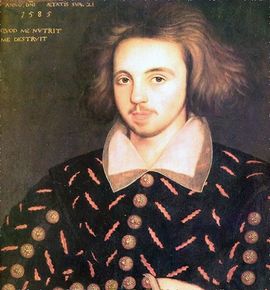
Christopher Marlowe (1564-1593?)


Bild
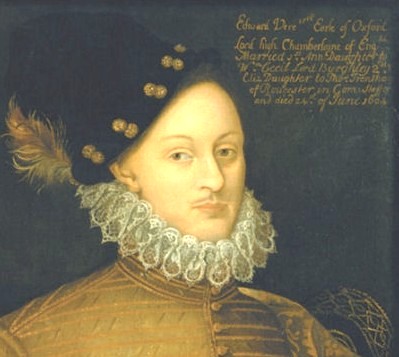
Edward de Vere (1550-1604)


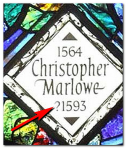
BildChurch Window, Westminster Abbey, London - (Section -Note question mark!)


One baffling Oxymoron  or irony in literary history is  that the two most influential candidates for  Shakespeare's  Authorship , Edward de Vere , 17th Earl of Oxford (†1604)   and Christopher Marlowe (†1593) both  died too early to be seriously discussed .-

Whereas the date of death (1604) of  Edward de Vere is not in doubt, Christopher Marlowe's exact death year today  is in doubt and has even been questioned in the poets Corner of Westminster Abbey (see Question mark)


Edward de Vere's  death (1604) occured much  too early....
Accepting the enforced faked death of Marlowe (1593) there would be no need to struggle with the issue of the Oxford Shakespeare authorship and Oxfords untimely death  raising endless questions


Why  Oxfordians for a century have not even begun to tackle the 1604 issue with its abundance of  insoluble literary,  psychological, historical and so many other conflicts ?

..                Without any doubt, in the long run,  Christopher Marlowe holds the  better cards.


Who Really Wrote Shakespeare? The Most Explosive YouTube Videos Online


----------------------------------------------------------
VIDEOS – Complete Video Archive:
OPEN  —>   Heading-->  Home -->Videos -- Shorts  -- Posts
                                                                   ->Popular


(475) Edward de Vere: the greatest impediment to a solution of the "historical" Shakespeare authorship conspiracy!

The Oxford-Shakespeare Authorship... 

...thesis is soon going to be a hundred years old.- 

Was there any progress during a century?

________________________________
.... the crucial reason, why over 100 years the Oxford theory
 has not gained ground, is not that William  from Stratford was the Poet Genius (Be sure he was not!) but that "Edward de Vere" died much too early (1604) and  
no contemporary has ever described him as a literary playwright  and poetical genius....
-----------------
BildProf. Roger Stritmatter

Roger A. Stritmatter (*1958) is general editor of Brief Chronicles, a delayed open access journal  covering the Shakespeare authorship question and a founder of the modern  Shakespeare Fellowship (SOF), an organization that promotes Edward de Vere, 17th Earl of Oxford, as the true author of the works of William Shakespeare.
 He is one of the leading modern-day advocates of the Oxfordian theory of Shakespeare authorship,  and has been called the “first professional Oxfordian scholar”.

In his first self made "YouTube Video" he claims that he...

a) "....has studied the evidence carefully enough to realize that as up to 2016 we are in a significantly advanced stage of what historian of ideas would call a "Paradigm Shift".-

b)" ... has been living with  a 400 year old peece of Mythology who Shakespeare was and what relationship between his life and his works is..."

 How can Dr. Stritmatter expect a paradigm shift within the next 100 years, if Oxfordians for a century  have not even begun to tackle the 1604 issue with its abundance of  insoluble literary,  psychological, historical and other conflicts ?

... in the long run, I'm afraid,  Christopher Marlowe holds the better cards.


-

VIDEO  Roger Strittmatter


VIDEOS – Complete Video Archive:
CLICK. —> https://www.youtube.com/@bastianconrad2550
OPEN  —>   Heading-->  Home -->Videos -- Shorts  -- Posts
                                                                   ->Popular


October 17, 2016

(474) George Wither [apart from Shakespeare]:The single most significant pseudonym of Christopher Marlowe (4)

GEORGE   W I T H E R (4)

George Wither was a penname [pseudonym] 

of Marlowe / alias Shakespeare

_____________________________

Bild
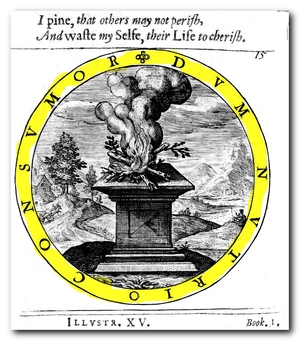
Roundtext: Dum nutrio consumor
Bild
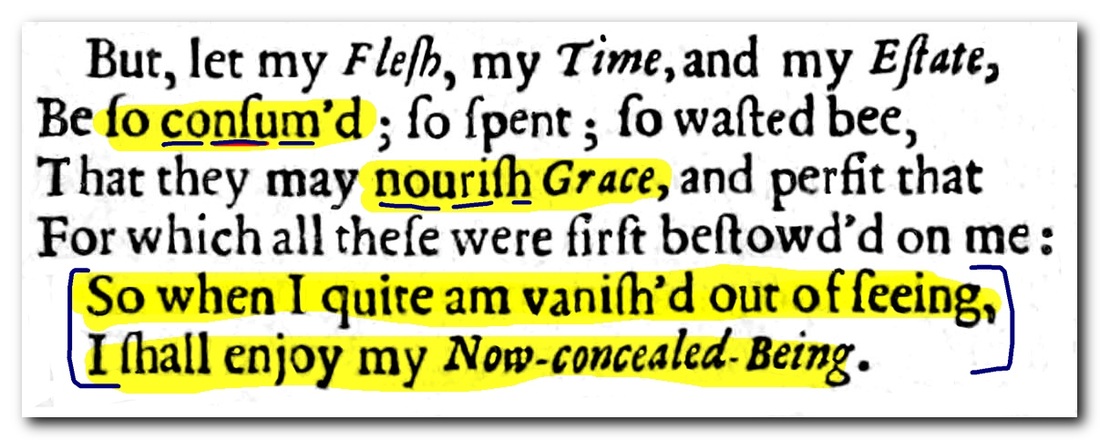
Last 6 lines of a poem of 30 lines corresponding to this Emblem
Bild
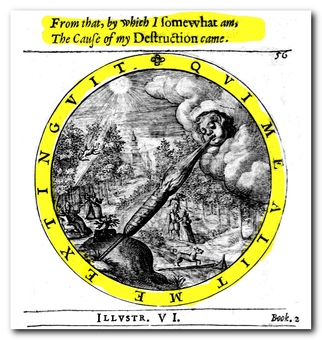
Roundtext: Qui me alit me extinguit.
Bild
Last 6 lines of a Poem of 30 lines corresponding to this Emblem.
Bild Section (upper left corner) of Christopher Marlowe's Portrait

Christopher Marlowe's life Motto written on his portrait at the age of 21.

"QUOD ME NUTRIT ME DESTRUIT"

describes his dualistic Monism, how seemingly opposite or contrary opinions ("Contrarities") may actually be complementary: 

       All depends on your perspective.

In George Wither's "Emblem-Poem"-Book   Marlowe' s Motto appears almost word by word twice (Book 1 -15 and Book 2 -6 s.Faksismile)

These observations together with abundant significant contextual informations
 strongly supports the idea of a penname of George Wither  

"quite vanishing out of seeing even 
though he also enjoyed his concealed-being"...

================

G.Wither see also Blogs 469, 472, 473, 474, 478, 479, 671


VIDEOS – Complete Video Archive:

OPEN  —>   Heading-->  Home -->Videos -- Shorts  -- Posts
                                                                   ->Popular