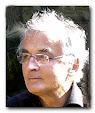
The most revealing aspect of this fine Video is not what is said about Shakespeare, but what is carefully avoided. The decisive question is: why is she not willing to spend even a moment discussing the Marlowe–Shakespeare authorship problem? In scholarship, disagreement normally invites argument; controversial theses are examined, tested, and refuted. Yet here we encounter something different — not refutation but refusal. The Marlovian hypothesis is excluded before evaluation begins. Such silence cannot be explained by lack of awareness, since the theory has existed for more than a century and continues to attract serious analytical attention. The refusal must therefore have another cause. To engage the question would mean admitting that authorship is not historically settled but intellectually open, and that the traditional biography of Shakespeare may rest on assumptions rather than decisive proof. The avoidance itself becomes meaningful: the debate is dangerous not because it lacks arguments, but because it possesses them.
Christopher Marlowe’s Edward II offers a clue to why the issue is uncomfortable. The figure of Gaveston embodies a man whose survival depends on performance and concealment, a personality living simultaneously inside and outside official identity. Read psychologically, Gaveston resembles a dramatist imagining his own precarious existence within a hostile political environment. If Marlowe projected aspects of himself into this character, then the idea of literary self-concealment is already present in his dramatic imagination. The Deptford “death” of 1593 would then appear less as a conclusion than as a transformation — a narrative disappearance followed by re-emergence under another name. Once this possibility is entertained, the sudden rise of Shakespeare no longer looks miraculous but continuous. Precisely here lies the point at which discussion becomes threatening: the plays themselves begin to suggest continuity where tradition insists on separation.
The crucial question therefore returns with greater force: why refuse the discussion altogether? Academic culture usually prides itself on critical openness, yet certain questions encounter an invisible boundary. To consider Marlowe seriously as the continuing author behind the pseudonymous Shake-speare would unsettle institutional certainties — editorial traditions, biographies, and centuries of pedagogical consensus. Ignoring the problem preserves stability; discussing it introduces uncertainty. The refusal is thus not purely scholarly but structural. Silence functions as a protective mechanism, shielding an established cultural story from destabilizing inquiry.
Gaveston becomes, in this light, more than a dramatic character; he becomes a metaphor for the authorship problem itself — present yet denied, visible yet officially excluded. The plays invite psychological reading, while criticism insists on biographical closure. The paradox is striking: the stronger the need to avoid the Marlovian question, the more significant that question appears. For if the orthodox position were entirely secure, discussion would pose no threat. The real mystery, therefore, is not why some scholars argue for Marlowe, but why others refuse even to engage the possibility. The silence surrounding the debate may ultimately reveal more about the fragility of certainty than about the weakness of the theory itself.
=============
A:). Marlowe/Shakespeare Authorship Video Archive:
https://www.youtube.com/@bastianconrad2550
Open Heading--> Home -->Videos -- Shorts -- Posts
->Popular
B:). Marlowe BLOGPOST(780) https://the-true-shakespeare.blogspot.com/

No comments:
Post a Comment