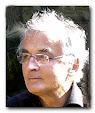
O X F O R D S V O I C E S (=PSEUDONYMS?)
 |
| Robert Prechter |

O x f o r d i a n
Robert PRECHTER
wrote a PROLOGUE
To his 24-volume online bookset titled Oxford’s Voices—\What Shakespeare wrote before he was Shakespeare.
In which
he finally summarized:
“We will find that Shakespeare did not suddenly burst forth from the head of Zeus and issue a masterpiece.
The true author [for Prechter : Oxford 1550 -1604] was 43 years old at the time. He had been writing for decades [backed by no facts, by nothing!! ] to reach the level of expertise required to produce [his first printed work, 1593 ] Venus and Adonis.
His output under the name Shakespeare was the pinnacle. What path did he take to reach it? What else did he write? ....
....Elizabethan literature is famous for hidden and disguised authorship.”
https://oxfordsvoices.com/prologue/
-----Voices vs Pseudonyms ------
Pseudonyms are not roles...
The Marlow Multi-pseudonymity Theory does.
And only one explains why a dead man keeps writing.
_____
PROLOGUE
ROBERT PRECHTER
(in
OXFORD’s VOICES)
( “AMERICAN
History” omitted)
Suppose you were studying ENGLISH history and found out that 200 mostly unknown British or Londoners wrote brilliant LITERARY WORKS 45 years late in the 16/17th. Your evidence for this historical anomaly is 300 literary scores published under different names. You read the historical literature on the subject and find that most of these WRITERs wrote only a few writings. You recognize three mysteries:
(1) that so many writers arrived on the scene in one period,
(2 that so many were exceptionally talented, and
(3) that
so many of them quit it after a few
efforts.
You read the critical literature on the subject and discover a fourth mystery:
4) that the literary works these people composed were of a kind:
They
all drew from the same set of sources. They had similar literary themes. Every writer
had studied Holinshed, Ovid, the Greeks etc but not XXXX or YYYY.
You investigate the writer's background and find that when they were not
writing books or pamphlets, they were merchants, farmers, manufacturers,
barbers, clerks, secretaries, preachers, soldiers, adventurers, country gents
and government officials. The most celebrated composer of them all was not even
from London but from a pig farming village (STRATFORD) across the border in
WARWICKSHIRE. His will, a copy of which still exists, implies that he did not
own any musical instruments or music books.
Further research reveals that recurring literary
themes in the compositions reflect the talents of an obscure PLAYWRIGHT genius
in London, whose literary innovations show up in the subtleties attending. Yet none of these Londoners ever went abroad.
To get a bead on how this situation might have
come about, you read biographies of the purported Writers. Try as you might, you can find no
useful information. The outstanding writers of LONDON were virtually unknown in
their own time. Town records show little more than scattered entries in ledgers
vaguely attesting to these people’s mundane existence. Neighbours who kept
diaries did not mention their LITERARY talents. The WRITER's relatives did not
mention their literary talents. The Writer's own surviving letters did not
mention their literary talents. The only contemporaries who mentioned them were
other writers, in the dedications
attending their literary scores. Their texts offer no personal information.
When the writers died, no one eulogized them.
Later biographers penned conjectures on how all
these writers got their poetical educations: “ Biographies include fanciful re-enactments of a ship captain
attending a Play in London and reporting to his drinking buddies in LONDON All the biographies struggle to re-enact the
apparent story. None of them asks whether it is true.
Nor do any of them ask such questions as: “How
could a semester’s instruction on the Sonett explain the knowledge required to
produce a POEM?” “How did all these writers manage to create such similar
pieces?” “Why would inebriated seamen in a bar be talking about the nuances of
an Elegy or PLAY and writing?” “Where did these people learn to invent
iambic hexameters?” “How could a busy shopkeeper find the time to educate
himself to the highest standard of literary composition?” “Why did most of
these literary writers write so few pieces?” “How could a town of 200,000
citizens produce 150 literary geniuses on a par with SHAKESPEARE?” “How come no
one of the days reported meeting any of these people?” “Why did this era of
brilliant literature composition go on for 45 years and then abruptly end?”
You go back to the historians, who tell you it was a “special era.” You think about the degree of artistic abilities of the inhabitants of your own town, your own neighbourhood. You think about the histories of Australia, China, Russia, Chile and Norway. You cannot think of any time or place in history when one out of every thousand people were creative geniuses, all with vast and special knowledge, all bent on the same form of artistic expression, all while doing something else for a living, all while the rest of the town’s inhabitants didn’t bother to acknowledge their existence. Special era? It was an alien era.
There must be some other explanation.
Then you find out about a LITERARY GENIUS who was a personal friend of
the London director, who studied Beethoven, Mahler, Brahms and Chopin but not
Mozart or Bach, who wrote some literary exercises in his youth, who immigrated
to LONDON the year before the LITERARY WORKS began to appear, and who died the
year they stopped. He had no known occupation, but scattered records show that
he was intimately connected with Theatre music and the GLOBE. A dozen LONDON writers of his day
praised him as the most accomplished classical POET of the era, yet only a
smattering of experimental literary compositions from the time of his youth in
London survive.
Intrigued, you research the dedicatees of the WRITINGS
and find that many of them are friends and family of the literary genius. You
list the publication dates for all the literary works and find that they lie
along a temporal continuum. From the date of the literary genius’s arrival in LONDON until the date of
his death, eight to twelve literary works are published each year under
different names. After his death, the volume of Literary works published in LONDON contracts severely, and
those that do reach the press are of inferior quality. A few years later, a
collection of exquisite PLAYS and Poems by one of the mysterious POET &
PLAYWRIGHT of the earlier era—the STRATFORD man—is published. The people
funding the collection, it turns out, are unrelated to the STRATFORD man. Rather, they are the LITERARY genius’s son-in-law and his daughter.
Biographers who encounter all this information stubbornly
reject its clear implication. They insist that anyone who challenges the
standard story must be a snob who refuses to believe that shopkeepers can be POET
genius. They say it is self-evident that the Playwrights areas claimed because their names are on the title pages of the literary works.
You nevertheless decide to take up the task of
figuring out which poems & plays were written by the genius and which ones
were written by contemporaries he inspired. The task requires studying his ways
and finding out which literary works do and do not share them.
All such a challenger of the orthodox stance needs to possess is an unbiased mind and a basic ability to reason. From there, it is simply a matter of evidence.
The story we will investigate takes place not in
Boston in the second half of the
1800s but in London in the second
half of the 1500s. During that time, the population of London was the same as
it was in Boston in the latter half of the 19th century: on a growth curve from
150,000 to 300,000. There is a qualitative difference, though, because the literacy rate in late-1800s Boston was
close to 100 per cent, whereas the literacy rate in Elizabethan London was no
more than 30 per cent. The standard story requires that one out of 300 people in
London who could read and write was a literary prodigy. Our aim is to sweep
aside this fantastical point of view and find out what really happened.
We will find that Shakespeare did not suddenly burst forth from the head of Zeus and issue a masterpiece. The true author was 43 years old at the time. He had been writing for decades (!NO !!) to reach the level of expertise required to produce Venus and Adonis (1593) . His output under the name Shakespeare was the pinnacle.
What path did he take to reach it? What else did he write? Elizabethan literature is famous for hidden and disguised authorship.
-----------------------------
© Robert Prechter, 2022
For a biography of the author, visit www.robertprechter.com/bio
Publisher: New Classics Library
Gainesville, GA USA
Contact
Us
———————-


No comments:
Post a Comment